


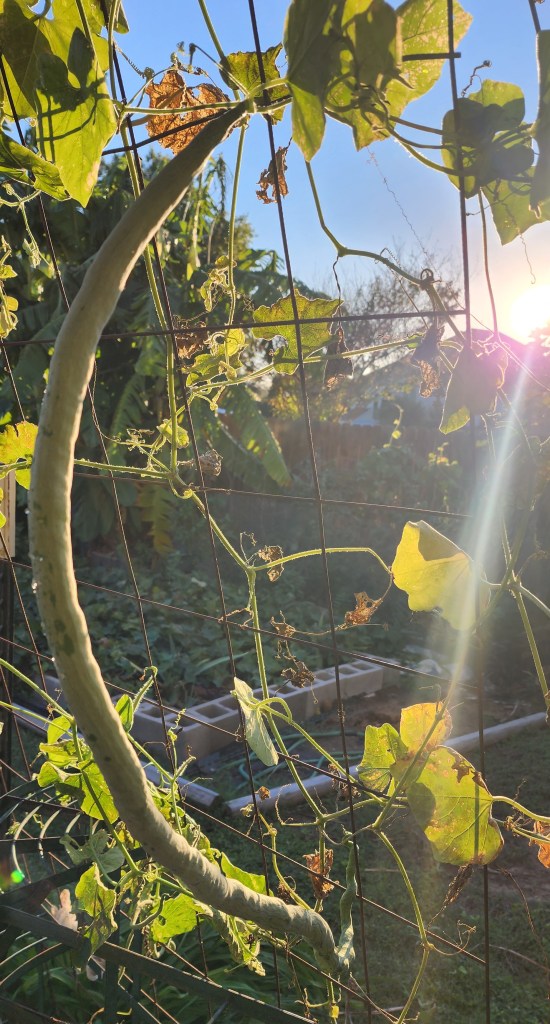
Usually when I am deep diving into large seed catalogs and I see “like ____, but better” I roll my eyes and think OK, I’m game. Prove it. This is what happened when I saw and then purchased seed for the Indian Python Snake Bean at rareseeds.com (AKA Python Snake Melon or Python Snake Gourd. Chachinda, Serpent Gourd, chichinda or parwal. It is used extensively in Asian cuisine. It can also be listed under “Chinese” instead of Indian)
Snake bean queries will often bring up asparagus beans (aka yardlong beans, which are actually: Vigna unguiculata subsp. sesquipedalis) That is not the plant we are talking about. The Latin name for the Indian Snake Bean is Trichosanthes cucumerina.
I bought mine from rareseeds.com but there are other seed companies with these for sale. If you buy seed on Etsy (or somewhere else out of someone’s backyard) you are braver and more trusting than me.
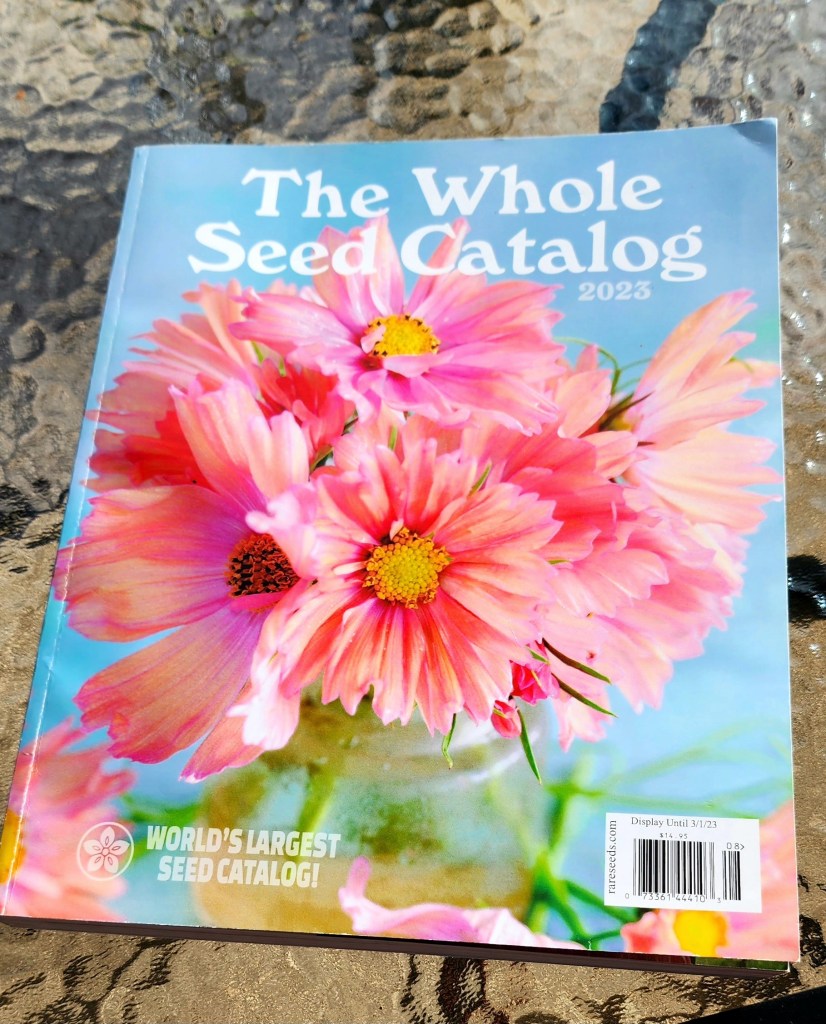
I honestly really like Baker’s Creek seeds (rareseeds.com online) they also have free shipping. I have purchased and enjoyed niche plants from tropical and subtopical regions that perform well in my Texas heat from Baker’s Creek. But almost never, do seed catalogs live up to their glowing praise, for plants that are new or newly offered in the States. I also ONLY buy exotic seeds from them.

If I need something generic, rareseeds is not where I shop. They have to pay for their glossy, beautiful, coffee table worthy catalogs, somehow and they choose crazy mark ups on seed as a way to accomplish that. However, shipping is free, even with their live plants, so sometimes it’s a decent deal.

For most of my seed I rely on Morgancountyseeds I really recommend their seed. High quality, fat packages of seed that reliably germinate and they have the cheapest seed I have found online. I’ve used them for about twelve years and they always have just what I need at a great price. Plus, they have some great Christian content, if you are interested.
But, back to the Gettle family and their seed catalog from Baker’s Creek. I have grown out some amazingly prolific Asian melons from them, that had a beautiful description of the quality and taste of the melons, only to end up at the last of my season with thirty melons no one (including me) would eat. I have had this same experience, across all seed sites, that are always trying to tempt me into buying something new to American growers.

So, my knee jerk reaction to anything that says “similar, but better” is, “yeah, right”. But I do eventually try weird stuff, and every once in a while, I really like the produce.
About beans:
So. I hate stringing beans. I hate processing anything in the pea/bean/legume family. Our heat and regular summer drought makes any stringyness in beans extra stringy. My kids are not fans of asparagus beans, plus, I have to grow them in a fenced area to keep the mice from eating the plants to the ground. I don’t want to string actual beans. Even the ones with “stringless” in the description tend to get a string in the pod down here in our super dry, super hot summers.
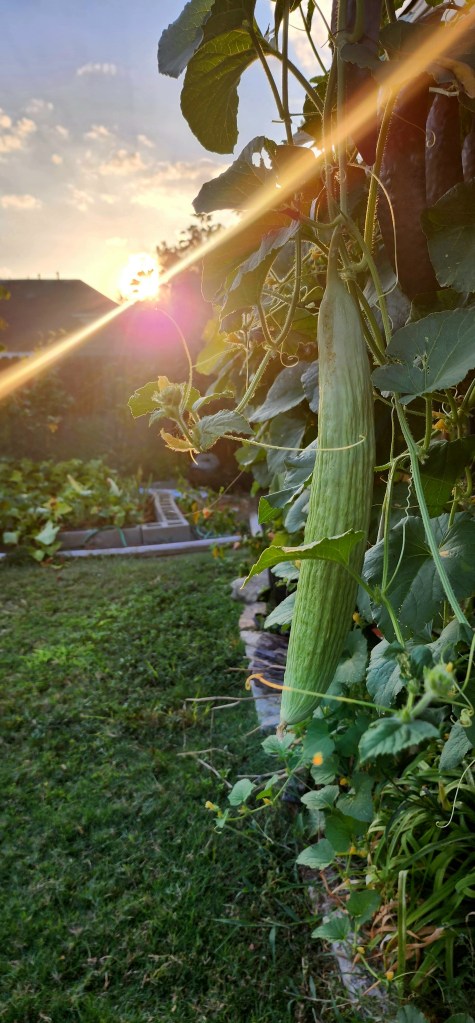

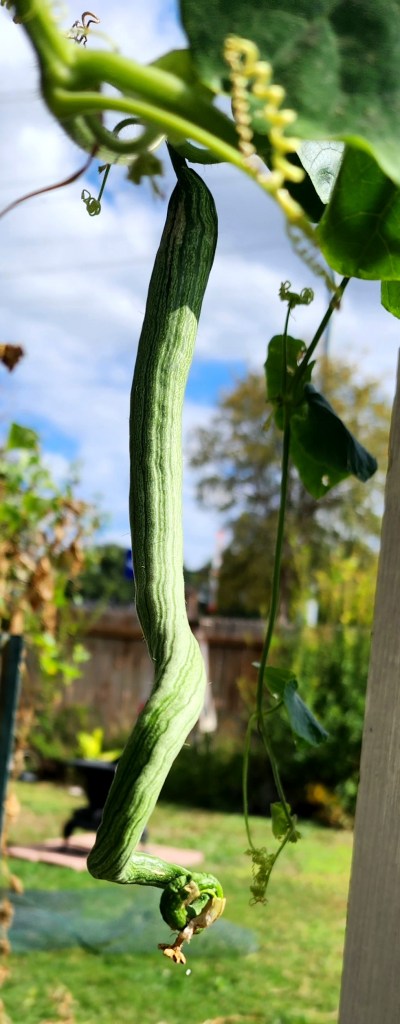
So, I was game to try the Indian Python Snake Bean, which, like Armenian cucumbers: are not related to the common name in their description. Armenian cucumbers are melon relatives, which don’t get bitter in our heat like regular cucumbers do. Indian Python Snake Bean is a gourd relative, that creates a long, striped, undulating pod. The leaves and vines are also edible.
Care for the Indian snake bean is similar to that of most other gourds. Pruning the plant’s lateral branches will help with fruit set and production. You can also tie a pebble or other weight to the flower’s end of the gourd to get a straighter fruit, but this is just for ease of slicing after harvest and not necessary.
Usually you harvest Snake beans when small, around 40-50 days from planting, but my plants are much older because I planted them right before our awful heat set in this year. The long varieties may be ready when only 16-18 inches, shorter varieties will be about 6 to 8 inches long. Seeds can be saved for the following season but light colored or white seeds need to be thrown out. Plant way more seeds than you think you may need. Generally the germination rate is only about 60 percent.
I think I ended up with maybe ten seeds in the rare seed packet. They were large seeds with a unique shape.

They looked nothing like bean seeds, and that makes sense since they aren’t related. I only had two vines grow for me. Although, I didn’t scarify or soak the seed. I think I planted maybe five seeds as an afterthought at the end of a crazy spring (you can read about my craziness here: Hugelkulter High Density Fruit Tree Planting.) The leaves and vines reminded me of a morning glory/cucurbit cross. The small, dainty flowers were exquisite. A little like the weird filament flowers from maypop, but just airy, small and light. They are white and fragrant, like many flowers with these qualities: they rely on night flying moths for pollination.

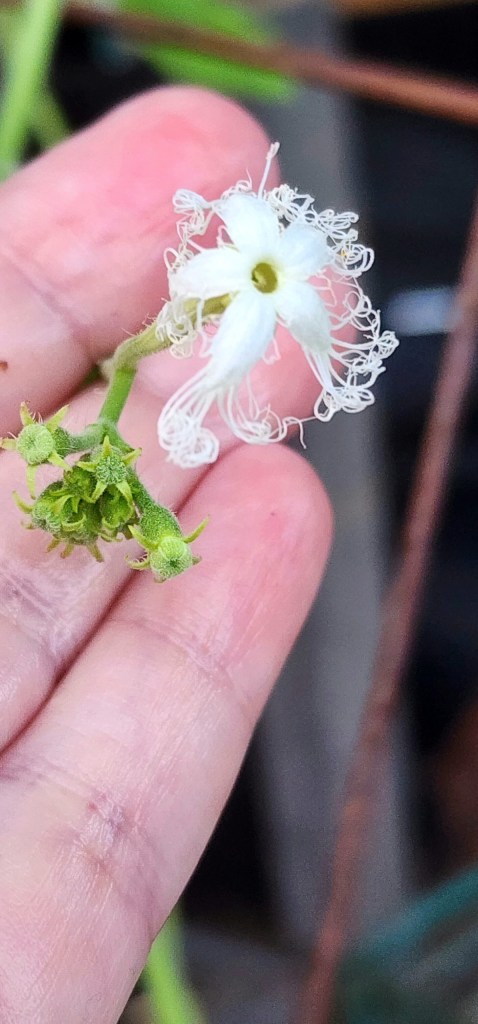
I planted them a little late in the season and in a bed with daylillies that shade the soil to keep moisture in. That bed also only gets a few hours of direct sun. They really struggled in our crazy heat and would collapse daily in the +100°F heat (but so did my winter squash and peppers.) I believe next year these are going in the ground at the same time as corn, (in February) in my south Texas, zone 8b climate and again at the end of summer.
So, since the vines are not really South Texas heat loving (not many plants are) I am also considering planting them in full sun and also in morning sun/afternoon shade, at the early part of my growing season to see which site they prefer.

I ended up, a few weeks ago, with two long pods. The whole plant smelled like peanut butter in our 100° days. (I’ve seen someone else say it smelled like fruity pebbles. It may depend on your heat level, as to the scent) Weird vine, weird pod, weird smell. Yep. All “weird” categories seemed aligned!
I brought the “beans” in and sliced them up. I tasted a few… Not bad! But they smelled weird fresh. Not a good smell and not peanut buttery anymore. So, again, score a point for weirdness. I froze a couple of baggies of the slices. I did not blanch them. They look like jalapeño rounds when sliced and that is what my kids originally thought they were.
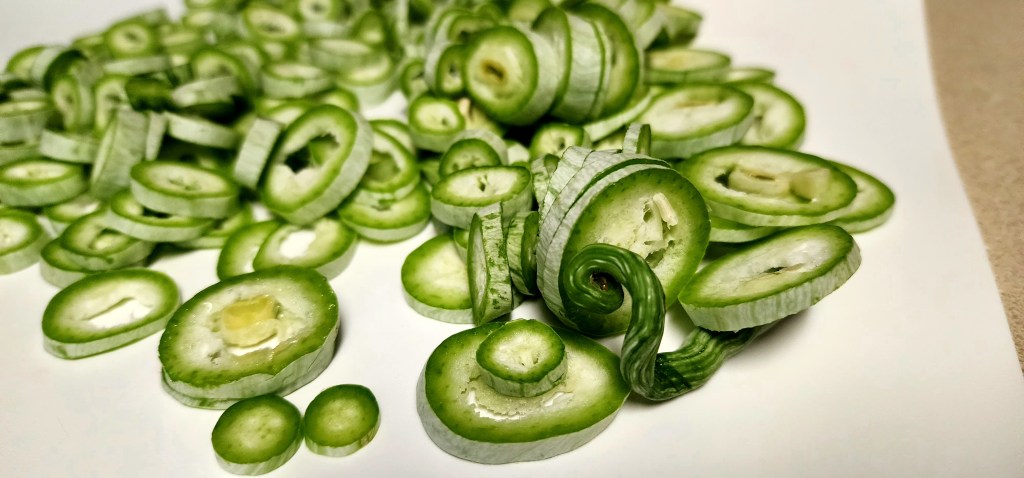
One night for dinner: I microwaved them until tender and served them to my family. They smelled like green beans at this point. I added salt and pepper and I tasted them.
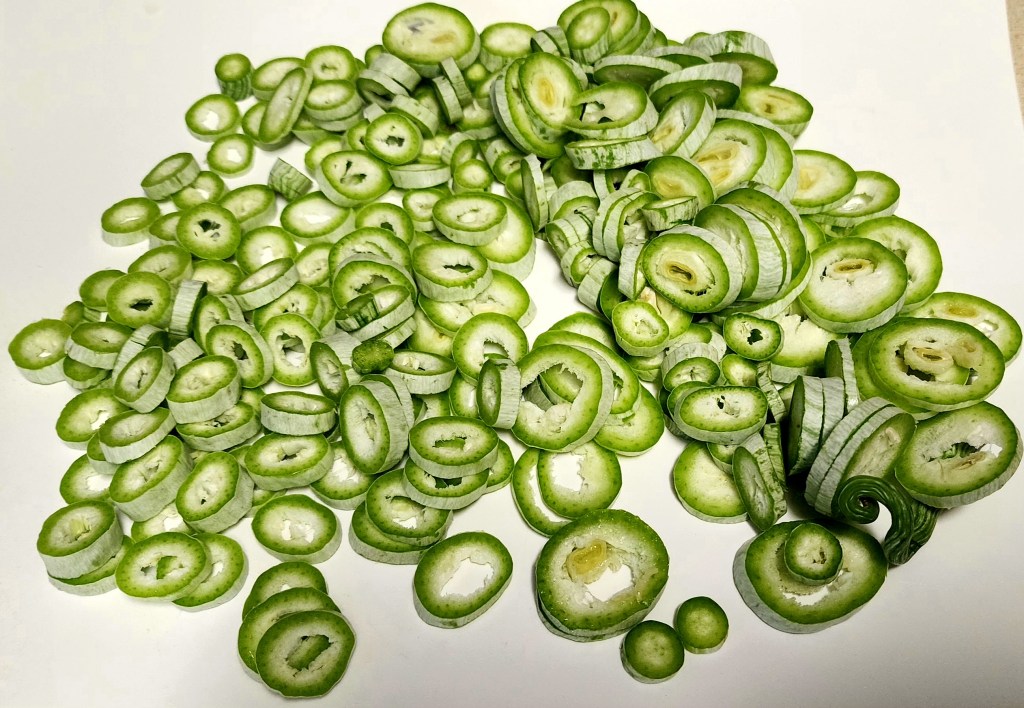
They were like green beans, but better.
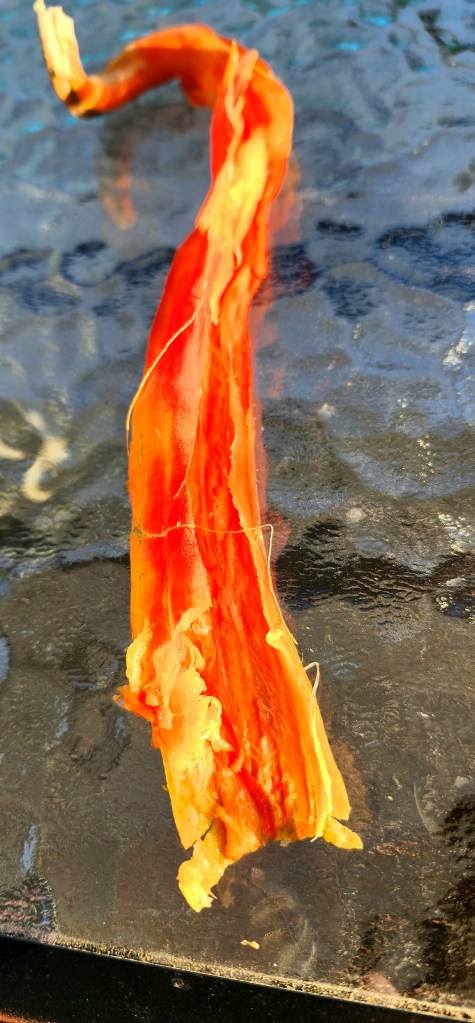
Finally! A seed description that lived up to it’s claim! I don’t care how weird this vine wants to be, if this is the end product, I’m 100% onboard! Nothing bothered it. No rat or mouse found them attractive. (This is a huge “plus” for this plant. Usually beans in my yard, are mouse preference number one.) My kids and husband enjoyed them (my kids are actually less picky than my husband. I have grown a lot of stuff that it came down to me trying to eat everything it made all by myself. So when it passes under my husband’s pickiness radar it’s a keeper.) This plant can also be used later, for the seed and tomato paste like seed pulp.


So, if you are in the market for a bean substitute that is pretty much mouse proof, incredibly tasty (like: better than green beans tasty), fun to grow, and makes it in warm climates I totally recommend Indian Python Snake Bean! You can read more about it’s stages of edibility, growing preferences and taste here: https://dwellure.com/indian-python-snake-bean-the-food-security-plant/
Meet you out in the garden, to munch on our new favorite snakey “beans”!
Crazy Green Thumbs
Discover more from Crazy Green Thumbs
Subscribe to get the latest posts sent to your email.
 Crazy Green Thumbs
Exactly! Almost all of the seed that I purchase is for the plain and simple varieties that I can find at the hardware store. That is what I prefer. A few are not so readily available from the hardware store, but are inexpensive by mail order. It is not that I am so extremely cheap. I just happen to prefer the cheap and common varieties. I do not grow varieties merely because they are weird or rare or expensive or from someplace that I never heard of. However, on rare occasion, I happen to want something that is somewhat rare. When that happens, I am pleased that Baker Creek Seed is able to provide them. That is where the sorghum came from. It was more expensive than other seed that I purchase, but relative to what I get for it, is quite inexpensive.
Do you have a Sorghum press? Or are you growing for seed or as an ornamental? I remember eating the Sorghum out of the horse feed when I was a kid and always wished I could grow it for the syrup. Presses are expensive though, at least for my budget. I have your seed in packets. I had a poor year for seed this year so I’m waiting for the last posds to ripen on the yellow bells so that I know they are fully formed. I’ll get them in the mail soon.
Thank you so much! I happened to notice some esperanza in Los Angeles. Brent told me that I could get some at the nursery, but they would not be the same as the straight species, grown from seed.
I do not have a sorghum press, . . . yet. We grew only a few as ornamental grass, and I took a small amount of their grain. I would like to grow more in the future, and would like to get sugar from them. I will likely try boiling them first. Also, I would like to grow a variety that is for sugar and grain, rather than a more ornamental variety. I will be cutting some sugar cane tomorrow, but I do not expect it to perform as well at home as it does here. Incidentally, it was also grown as an ornamental, but it happens to be what I have access to, . . . in Brent’s front yard.
After you froze them, were they still easy to use/cook?
Yep. Cooked up like frozen green beans do. Thanks for the coming by and commenting! I appreciate the visit.