

So. I know better than to try and grow a large scale “defiance garden”. That’s what I call growing things that your climate and soil won’t support. But, I’m a gardener. The whole point of gardening is to place plant matter in places that didn’t have them before. Basically anything you purposefully put in the ground is going against what nature had in mind, but it’s how we stopped being nomadic, foragers back in the way back.
I also have a job with an online nursery (Raintree) and they are paying me in plants. This means I have access to plants that I otherwise would not bother attempting to grow. These are things NOT listed on Texas A&M horticulture site for my area in south central Texas.

I had a bit of a panic this spring when the trees started to arrive and I suddenly realized my ideas for where these trees were going, would not work. We had a really wet spring and (along with that being really unusual) the temperatures were lower for longer. My plants had time to take hold before summer set in.
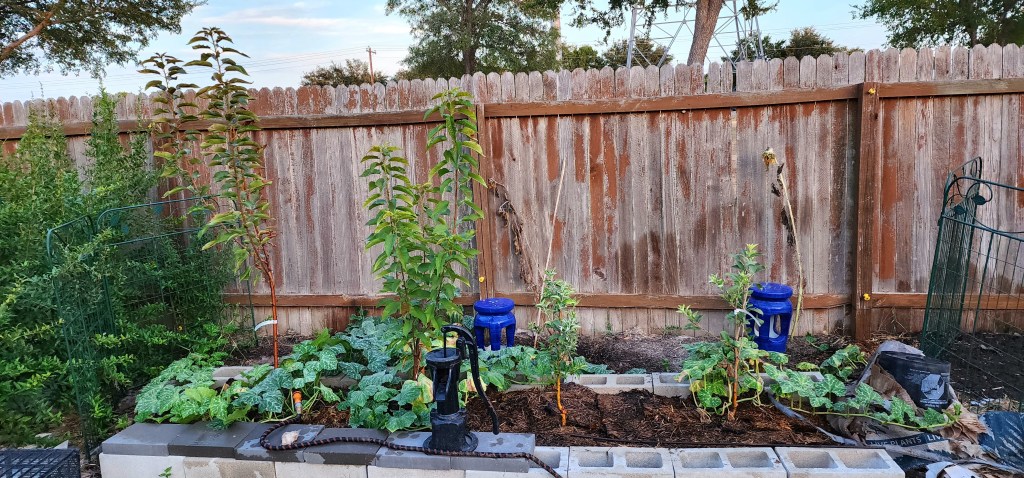
Then we had temperatures over 100 degrees for several months and maybe two rain storms. I had to water every other day. I did not rely on my soaker hoses at all this year. Those are harbingers of death in heat like this. It’s not that they aren’t helpful, it’s that checking every plant on my 1/4 acre lot goes down a little bit on the priority list, with automated water. You just think it’s done, get busy with other things and don’t go out and check each plant. This year I have several new trees that I can’t let dry out.
So, late this spring, I made a high density planting raised hugelkulter bed. Our soil here is garbage and has super high pH. The pear tree I have in native soil is constantly chlorotic and I have to drill it and place iron implants in the holes every two years. I did not want to have to do that with the new trees I put in.
The hugelkulter is basically a buried pile of organic matter that acts as a sponge. It starts with a trench and logs and you fill in the spaces between the logs with smaller things like leaves, mulch and straw. Then you build the whole thing up to soil level and add cinder blocks to keep the soil in place as you build higher than the soil level with your choice of ammendment. I don’t use bagged garden soil. Most of the time I use bagged compost instead. Most soil mixes have a lot of sand in them and sand and clay make cement. That would be even worse than my stupid native soil.

The high density part is sort of a bonsai approach to growing fruit trees. You plant them pretty close together and keep them at a low height for ease of care and harvest.
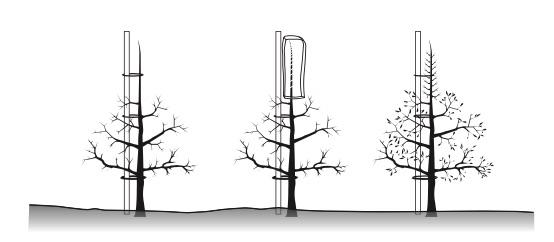

The link above is pure gold for information about high density planting. It’s written for professional orchardists but there is a ton of information that a hobby fruit grower can use.
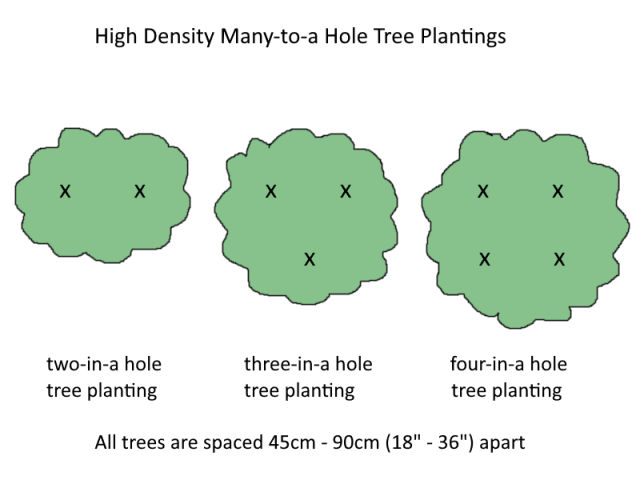
This is another great source for high density planting using the method from Dave Wilson Nursery, in California.
With these two ideas I decided to try some trees that have great fruit that I get more than enough chill hours for, but they have iffy heat tolerance. Growing “grocery store” fruit (that do really well up north) this far south is not something I would recommend, because it IS a defiance garden. If I slip up (like if my kids bring home a cold from school) and can’t get out in the yard to check on everything in our summer heat: I would lose most, if not all, of these “Defiance Garden” plants.
Despite my best efforts I lost an elderberry bush this year and some varieties of iris my mom brought me from Colorado. Interestingly the pill bugs (roly polies/sow bugs) ate the iris rhizomes that were exposed, looking for moisture in our hell of a summer.
All of these plants that I lost were 3-5 years old and had been in decline since last summer when we had our sprinkler system break (towards the main) and none of my lovely neighbors bothered to let me know we were watering the street every day for months. I can’t recommend suburbia if you have matured past those old relationships from high-school. But: I love my house, love our church, love our scout troop, love the weather, love my quarter acre, love San Antonio. I can put up with crappy neighbors.
My husband and I are also, ten to twenty years older (I’m in my fifties and my husband is almost 60) than most of our neighbors who have kids the same age as ours. Being old and set in our ways, we have little patience for the gossip and drama that goes on around us. Anyway, (immature people aside) the lack of water mixed with this miserable heat, burned up a couple of things I’ve been nursing along.


Back to the new stuff: in the high density fruit bed I put two low chill cherries and two low chill apples. I have a full sized pear and full size figs. I can’t protect either from squirrels and birds and I lose every pear, every year because of this. Hind site is 20/20. Had I known this was going to be such a battle I’d have kept the pear lower so that I could spray easily, net it and harvest easily. This is why I was so enthusiastic about the high density planting. I will be able to net these trees after they blossom and keep critters off of the fruit.
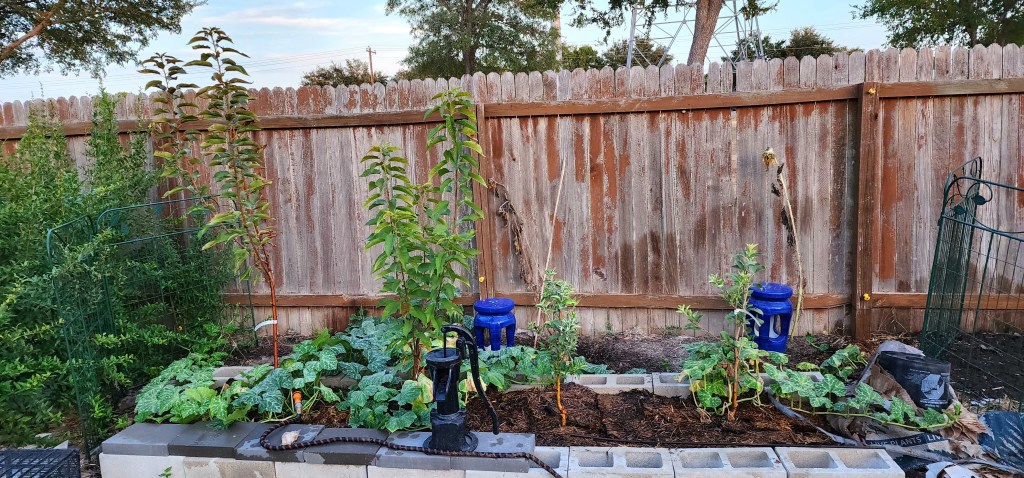
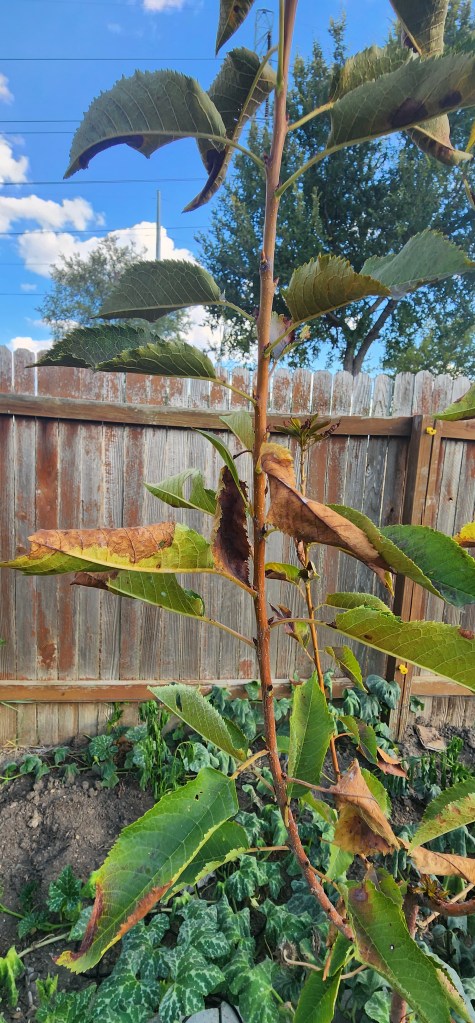
As our summer went along I went from watering daily to watering every other day with three day stretches every once in a while. As I backed off the daily watering the heat started burning the cherry’s big beautiful, almost tropical looking, leaves. I’d water and they’d look OK, but by the time I went out to water again the leaves would have new scorch marks on them. It was so incredibly hot outside that I could not stand out there and mess with them for very long.

I tried spraying kaolin clay on the leaves but I apparently don’t have a sprayer that the clay won’t clog. It helped a bit. But, eventually: I recognized that there was going to be irreparable damage to these plants and I needed to build a frame for some shade cloth.


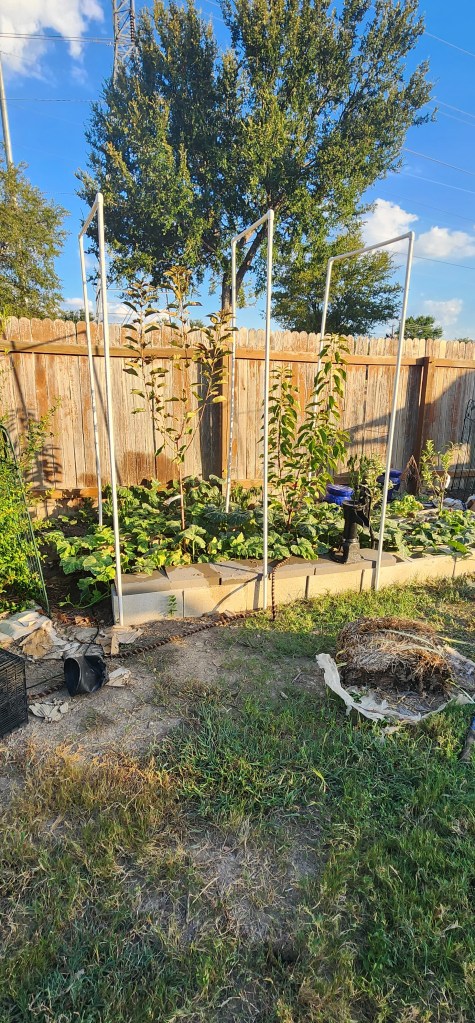
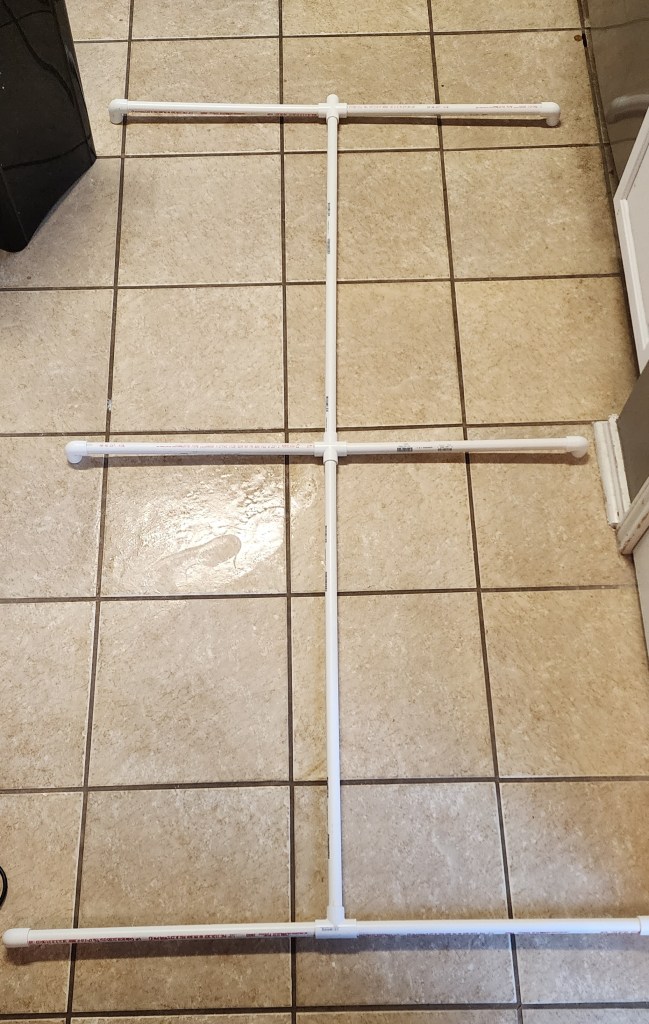
I drove some rebar in the ground around the raised bed. Then I took ten foot lengths of 1/2 inch pvc and cut them at seven feet. I used the left overs with some pvc elbows to create the rest of the cage. Originally, I did not glue these. The frame is a little bit too high for me to reach, even standing on the cinder blocks. I really didn’t want to drip purple pvc pipe glue all over myself. I ended up having to put the frame back together after any wind we got. So, eventually, I put my big girl panties on and went out and glued the whole thing in this miserable 100+°F heat. I assembled and glued most of it inside but it was still miserable having to reach up on my tippy toes and get the frame to go together completely.
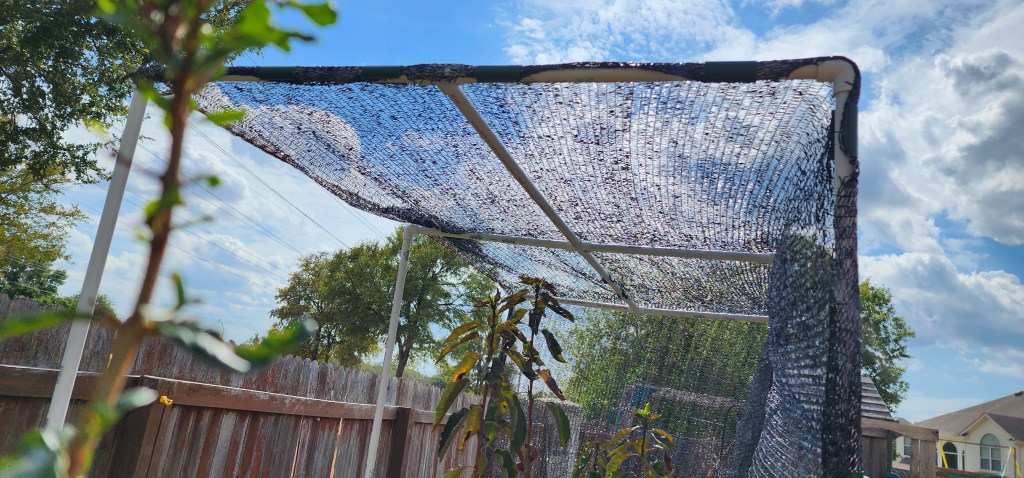
This is the the end result. I didn’t bother to net the back of the frame because there’s no direct sun on that side. I will be keeping this up until we start cooling down. I plan on white washing the trees to keep them from getting sunburn while they are dormant. I’ll take this down in fall/winter and put it back up as the heat starts to climb next summer.


Do I think these trees will eventually be big and strong enough to handle our summers? Probably not. Cherries and apples are not from this type of climate. But, with the pruning and shaping that I plan to do, this shade cage will probably keep these plants healthy and happy, and hopefully: load themselves with fruit every year.


I have done worse defiance gardens. And these trees are crossing into fiddly, extra work, which I usually try to avoid. However, if they successfully fruit, it will be worth it.
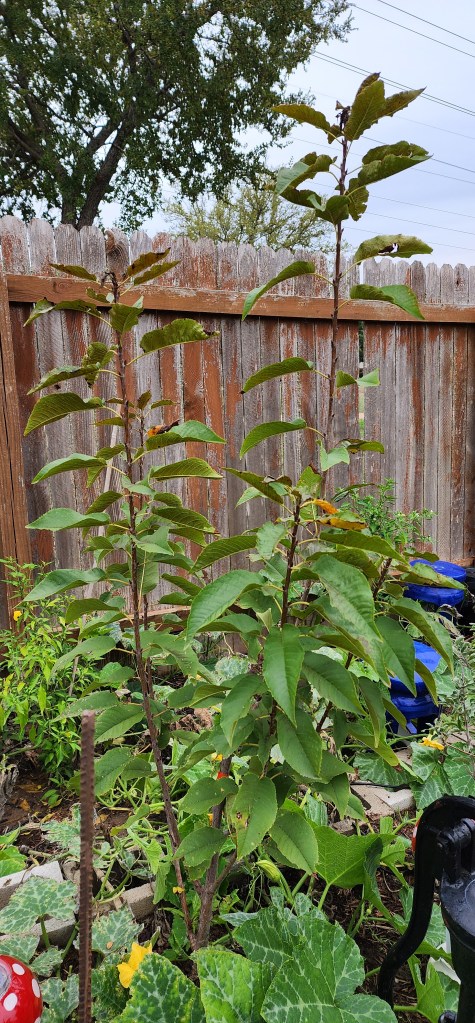

It’s the same thing as my banana bed. Hoping that the short season bananas I have will pump out some fruit this fall. I will keep adjusting growing conditions until they are successful.
I guess we’ll see. It’s a giant science experiment and I’m always up for those!
See you out in the garden!
Crazy Green Thumbs
PS It looks like I will be working with Raintree Nursery again next year. I will start putting up some information on the plants I’ve grown from them. Should be fun, plus, you can never say no to more plants!
Discover more from Crazy Green Thumbs
Subscribe to get the latest posts sent to your email.
 Crazy Green Thumbs
Are there ANY fruit bearing trees at all (banana, citrus, berry….. any edible fruits…..) that can survive the heat without too much care/work? Watering is ok but I have health issues that prevent me from doing physical gardening work very often.
Figs, non astringent persimmon, pears that are firelight resistant, plums like: methley, mulberry, pomegranate (if you don’t get hard freezes) peaches are ones I can think of off the top of my head, but some are more maintenance than others. Here’s a link with more fruits: https://aggie-horticulture.tamu.edu/fruit-nut/