

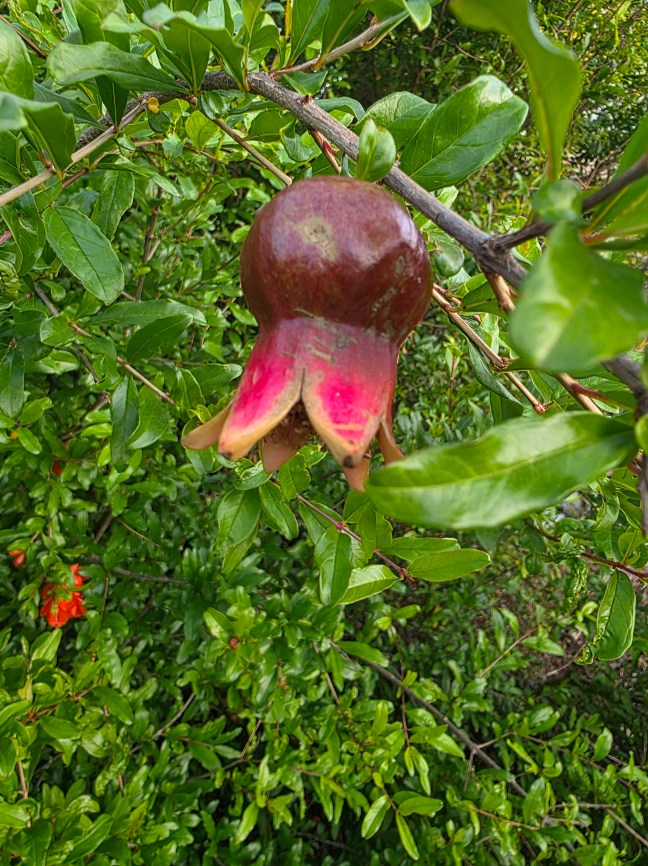
I have a pomegranate thicket. I figured out this year that this plant was grafted when I put it in ten or eleven years ago.

The majority of this monstrosity is rootstock. I almost never get fruit off of the back of this plant’s mess. I’m usually very busy all year long because I have so many fruit types growing. I don’t usually stop and consider that there may be something wrong, unless it’s very obvious. I assumed I wasn’t getting fruit because pomegranate fruits on two to three year old growth and we have had some sporadic deep freezes every couple of years.

/uploads/sites/6/2015/04/pomegranates_2015.pdf
If you can’t get the above link to open, pull up this page and scroll down to pomegranates: https://aggie-horticulture.tamu.edu/fruit-nut/
Once I looked up my purchase: I realized I had let the root stock come up and take over. The plant I started with was a parfianka, a soft seeded, sweet pomegranate. I believe that is what is currently blooming and why I have a ton of growth, but no flowers on the majority of what is growing behind it.
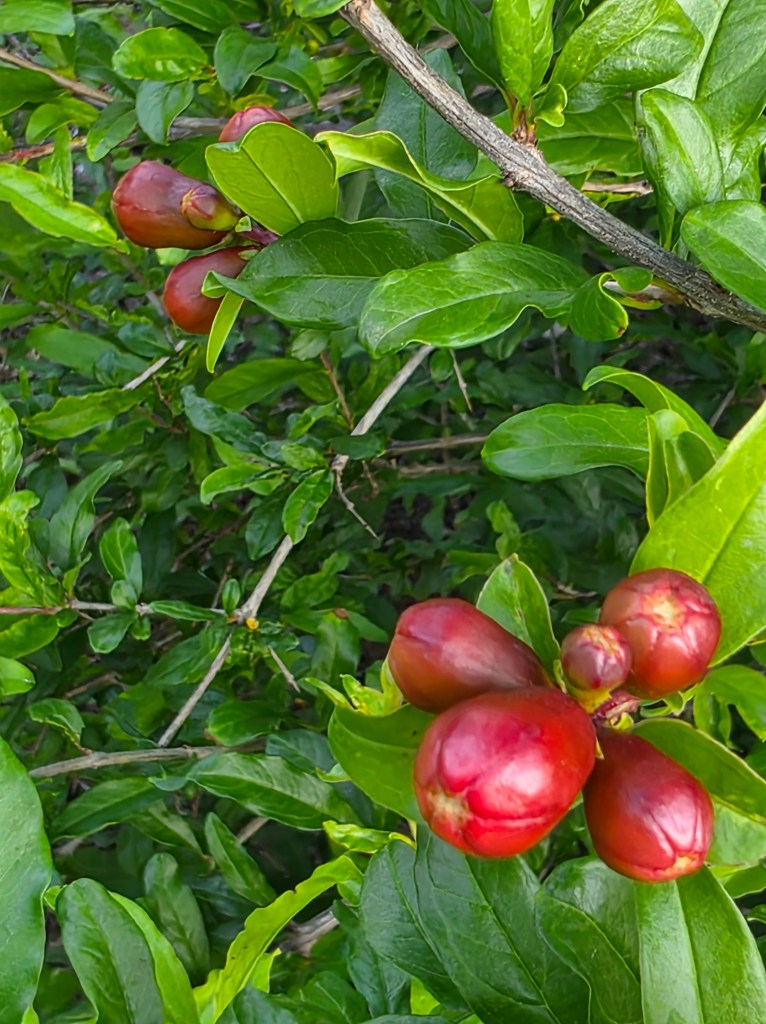
If you want an honest opinion on pomegranates, I will give you my thoughts: just buy Pom Wonderful pomegranate juice at the store. Yes, pomegranate juice is expensive. Yes, you can grow your own if you are in the right grow zone and have hot, dry summers. No, I don’t recommend messing with these. My personal opinion (after eleven years of growth and about 4-5 decent harvests): I hate processing this fruit.

https://youtu.be/3mqlh83bDQQ?si=tqBgZYhN4MxE884h
Here’s a video, above, showing the amount of machinery used to commercially juice pomegranates. This video also has arils and whole fruit preparation. (If you aren’t interested in those parts, the juicing info is at the beginning of the video.)
The amount of steps in this is why home growers get so frustrated with this fruit.
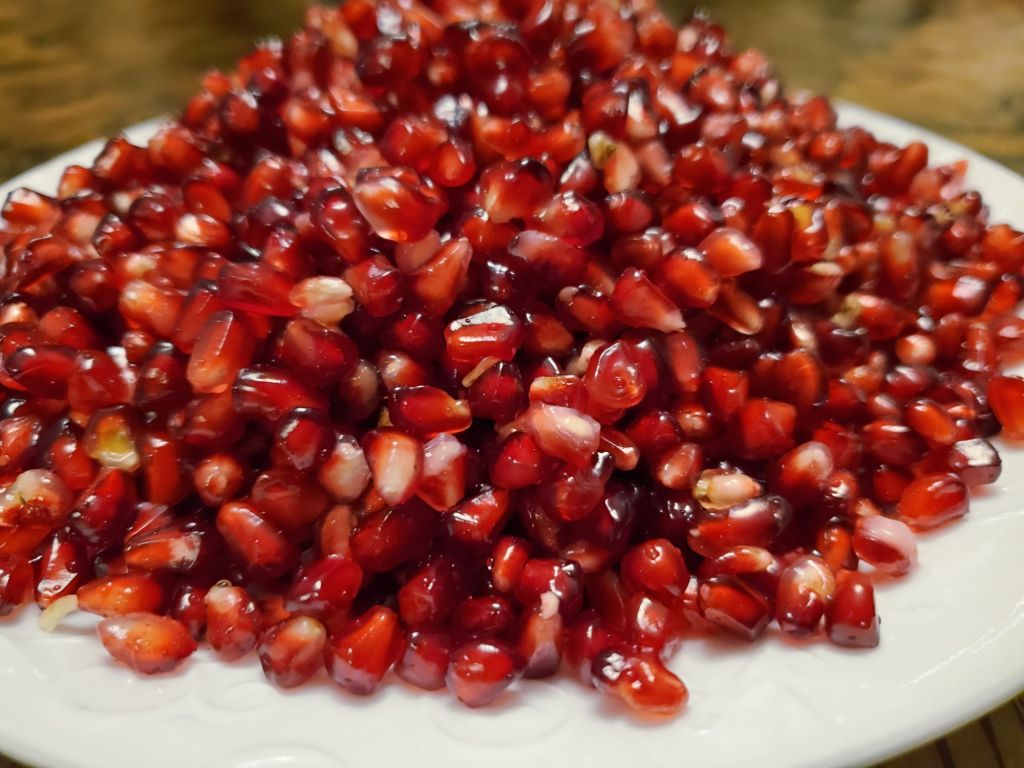
There are tricks to removing the arils. Some methods work better than others, but when you have 50+ fruit there is no truly simple way to deal with them. Plus: they are very messy, squirt dark juice everywhere and stain everything.
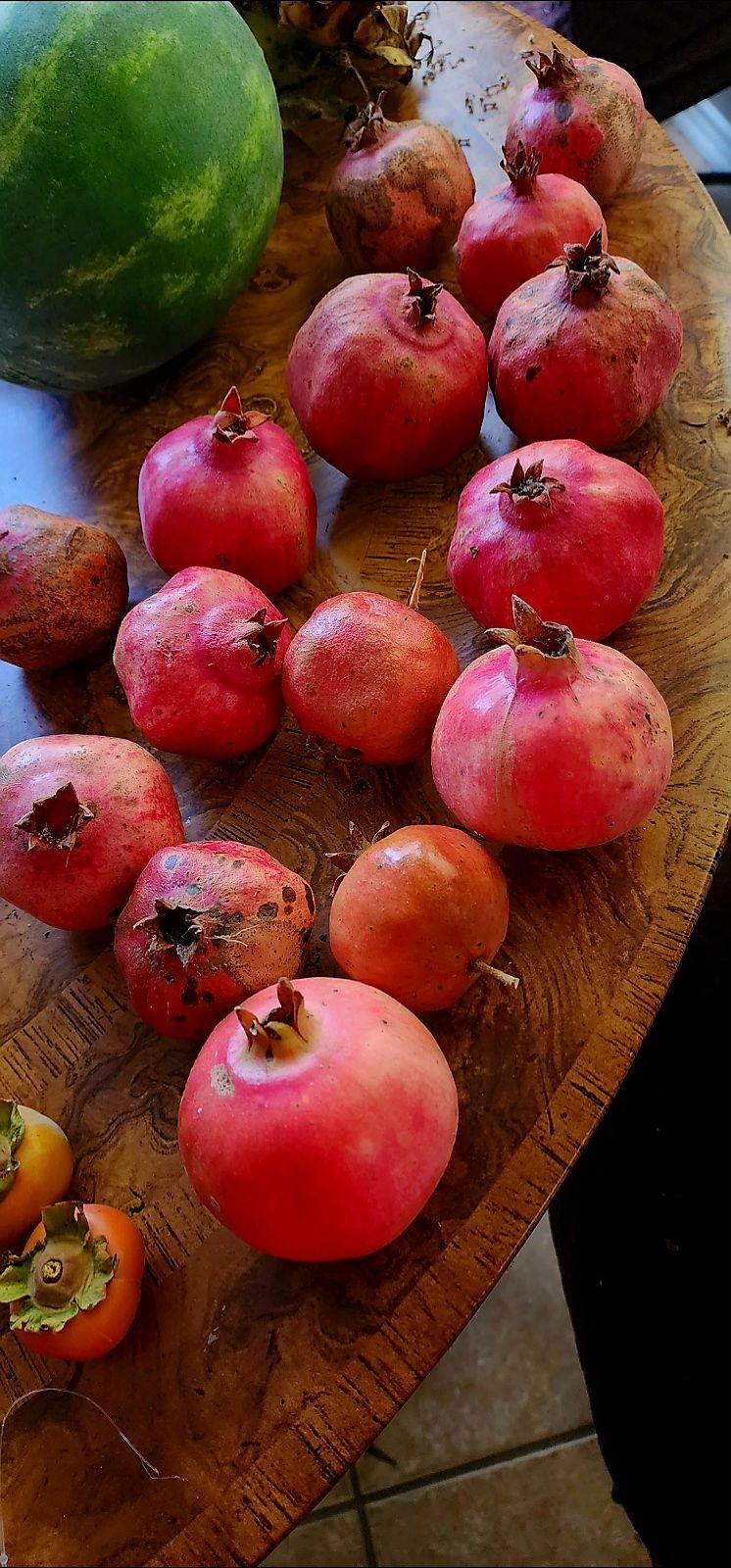
I have tried juicing them in a steam juicer. That, so far, has been the easiest method. But it’s still not, truly easy. Pressing juice would be great if I could find an efficient press. These fruit are much larger than an orange. Running them through a juicing machine crushes the seeds, which are slightly bitter. That is an option, if you’re OK with the resulting juice.

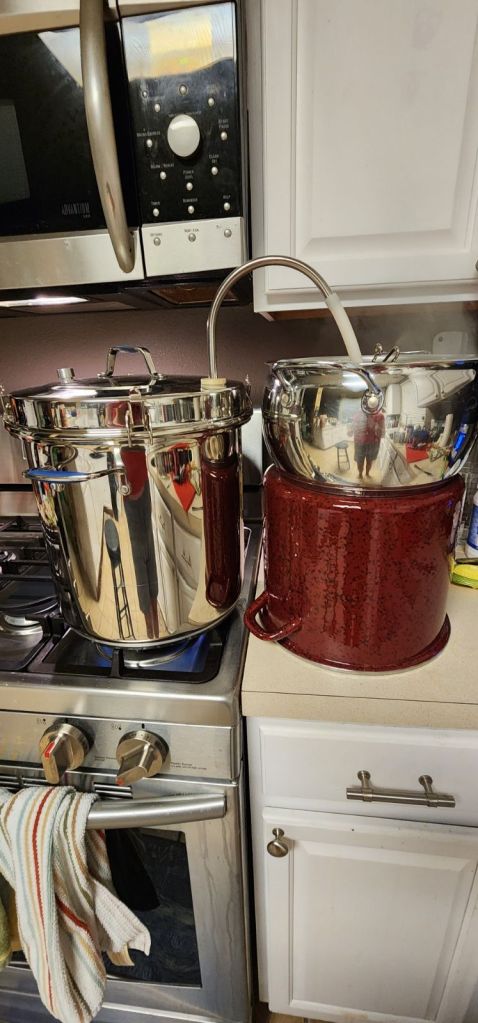

The way these plants flower and fruit is super unique. Almost like figs, the flower is not completely separate from the fruit. In figs the flowers are inside the fruit with access to the pollen and stamens on the interior. Those crunchy bits in figs are flower parts, not seeds.


Pomegranates are not quite like that, but maybe the bridge between a normal female flower forming fruit behind the blossom versus the flower being inside the developing fruit like a fig.

Rain is actually problematic if you live somewhere wet in the southeast, like Florida. This plant needs heat to ripen and drought to keep mold from forming within the fruit. I don’t know if I’ve ever taken a photo of bad arils, but I have had plenty. You can have a pomegranate with a section that’s moldy and the rest of the arils are fine. In that case I usually cut out the moldy area and then process the rest of the arils.
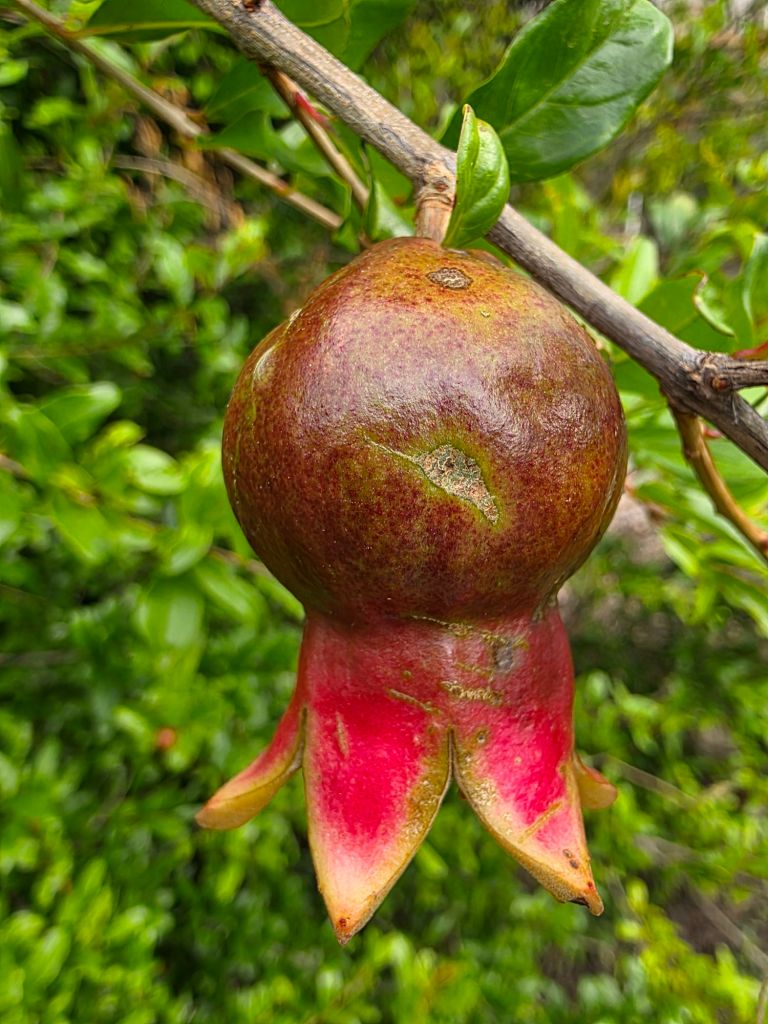
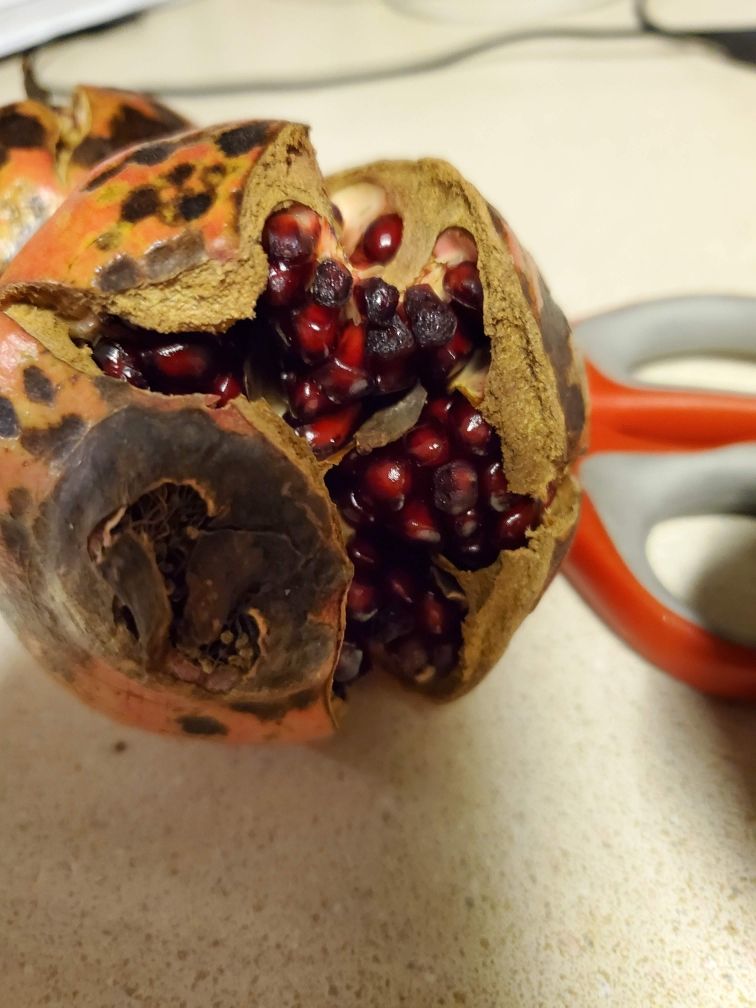

You can see here where water is a problem. There is almost no separation of the blossom and the fruit. The fruit tends to swell up and engulf the flower parts, if there was rain in this process, there will be a moldy interior. This is truly a desert plant. It’s why South central Texas and the desert southwest are great places to grow these.

We have just enough rain in the spring to help the plant along and then a period of dry hot weather as the fruit begins development.

Like most large fruit, pomegranates can become alternate year bearers. If you don’t thin the fruit and just let the plant set as many fruits as it wants to, you will end up with a ton of smaller fruit one year. Then the next year: the plant will rest. Thinning fruit can prevent this and produce larger fruit. If it doesn’t get a heavy freeze, this will become a pattern. If you do get a freeze, since this fruits on older (2-3 year old) wood: you may have to wait a couple of years for the plant to fruit heavily again. You can train this to be a single trunk, but again: freezes can kill the plant. A single trunk is a little more susceptible to freeze damage than a multitrunk plant. I grow mine as a multitrunk mess and I definitely need to prune and remove some of the shoots and runners that come up from it. However, I always have life getting in the way of running a perfect garden. So, sometimes I let chores go for the year and pay attention to my family instead. It’s a balancing act, and my kids are always my number one priority.

So in short, “heart rot” (or mold coming from rain during fruit formation) limits most east coast areas from enjoying this fruit. Cold winters or cool summers are limiting factors in the north. If you are somewhere wet, pull the spring flowers, before letting the plant form fruit. Then wait for flowers to come when the wet season ends. If you have consistent rain, all through your growing season: this is not the fruit for you. And even if you do have dry, hot summers, this fruit is not simple to process and ultimately I have better things to do than deal with a glut of pomegranates every year (this is also why I don’t mind when any of my plants that have fruit, that needs major processing: develop into alternate year bearers.)

See you out in the garden to see if we’re in for a year with fruit that is always an ordeal to process!
Crazy Green Thumbs
Discover more from Crazy Green Thumbs
Subscribe to get the latest posts sent to your email.
 Crazy Green Thumbs
This concerns me. I have worked with several pomegranate trees that either generate no suckers, or that generate only a few. I can only remember one pair of trees that produced a thicket; but that thicket was wicked! Now, I am growing two ungrafted pomegranates (from cuttings), so am concerned about their potential to sucker. One has a funny long Russian name. The other is unidentified. Although I know that they lack understock that could sucker, they could sucker on their own. I do not remember if the pair of pomegranate trees that produced a thicket were grafted or not.
Well I tried to keep this as a standard but it shot out growth early on. I’ve had this for somewhere around a decade. If I dig down there’s thick pomegranate roots out away from the plant. I cut a bunch out when I put the high density fruit bed in. But none of that has come up anywhere else… but the roots are definitely there. I wish you luck!
Thank you