


So have you ever really thought about the world of probiotics? Homegrown, like grandma (or great-grandma) whipped up every fall when the cabbages came in?

I make a lot of probiotic ferments. I make refrigerator pickles, 36 hour yogurt, kimchi, wine and sauerkraut. The fun thing is, you really don’t need specific ingredients you just need the basic idea. You can put a lot of different strains of bacteria in 36 hour yogurt. You can ferment just about any juice into wine and there are different yeasts that can make the very same juice taste incredibly different as wine. sauerkraut can be made with any fruit or vegetable that would naturally store on your counter top, for a week, without going bad.
Basically, sauerkraut is a cabbage base with whatever else you want to throw in there, and salt. I usually put fruit in mine because tart sour cabbage, salt and the sweetness of fruit: tends to light my fire.

I also don’t cook it. Yuck. That’s nasty and cooked sauerkraut has no probiotics in it. Freshly lacto-fermented sauerkraut can be more like a salad. And no: Lactofermentation does not mean you add yogurt cultures to it. It means that, with salt, Lactobacillus bacteria grow in the ferment on the contents of the sauerkraut that you put together.
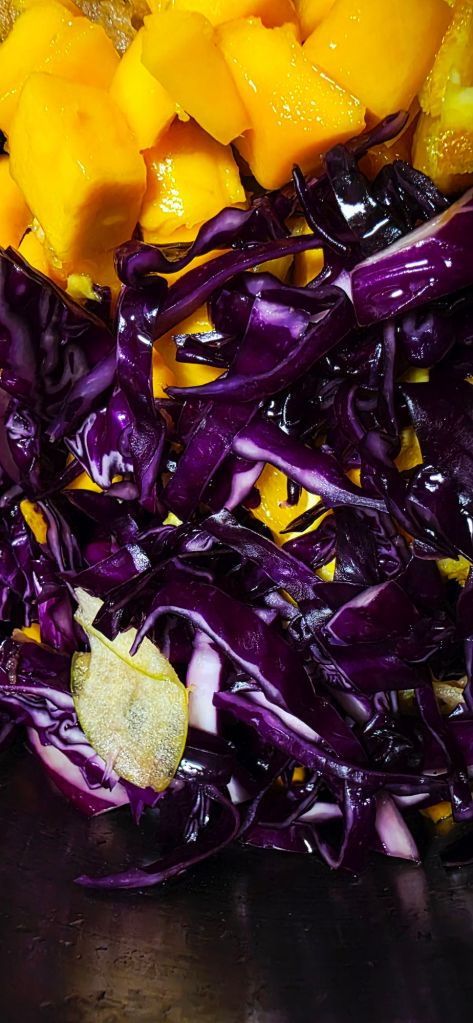
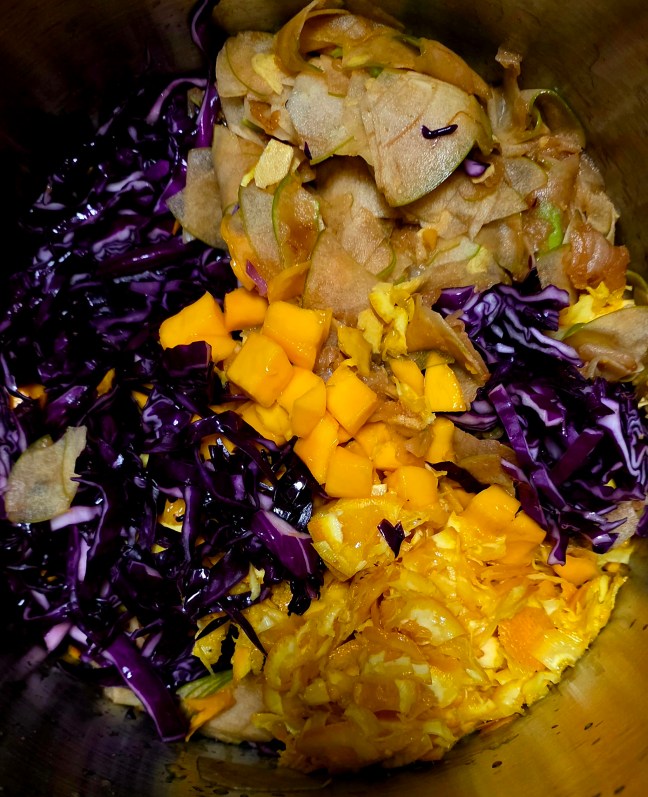
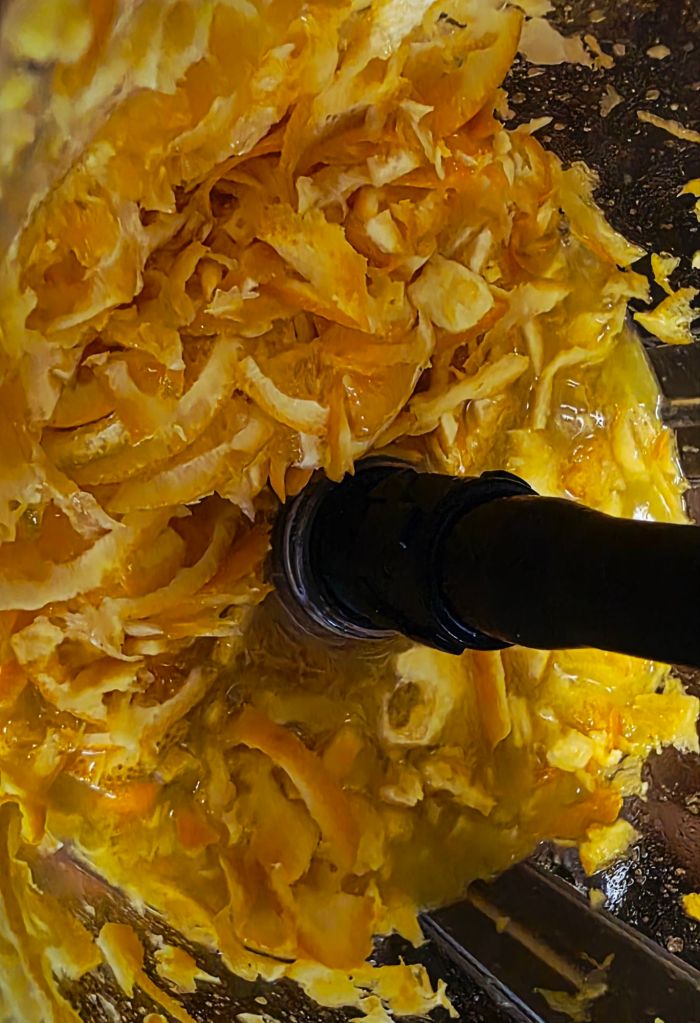
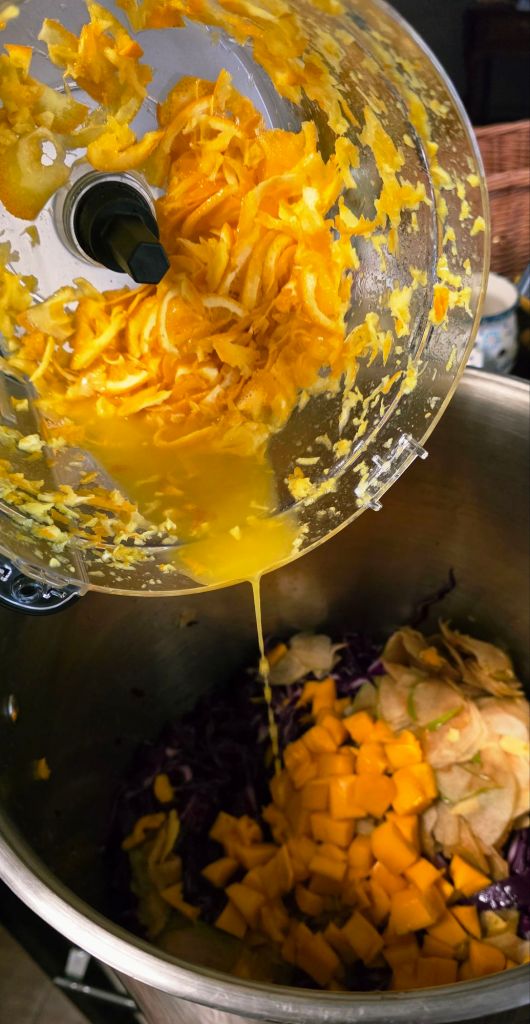
Most people know sauerkraut is cabbage based. But you can add pretty much anything that won’t go bad on your counter. What do I mean by that? Delicate things like raspberries and bananas don’t go in kraut. I mean, you can try it. I don’t suggest it. Find stuff that stores well, like a cabbage does. I use pears, apple, ginger, oranges that I run whole (I seed them first) through my food processor. This time I even threw in some mangoes somebody gave me that I had no purpose for. Chayote (my new absolute favorite vegetable) would work well, too. You can add cranberries, cherries, whatever you have a bunch of at the end of the season, throw it in with the cabbage.
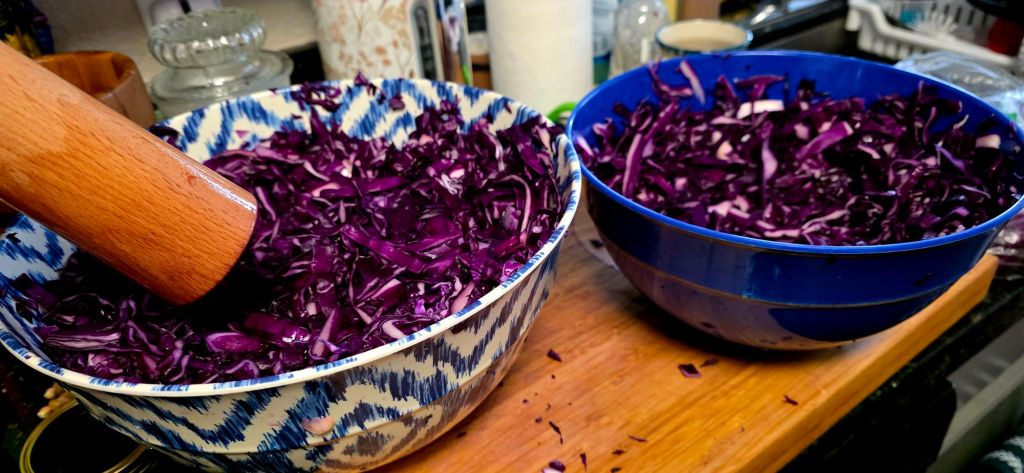
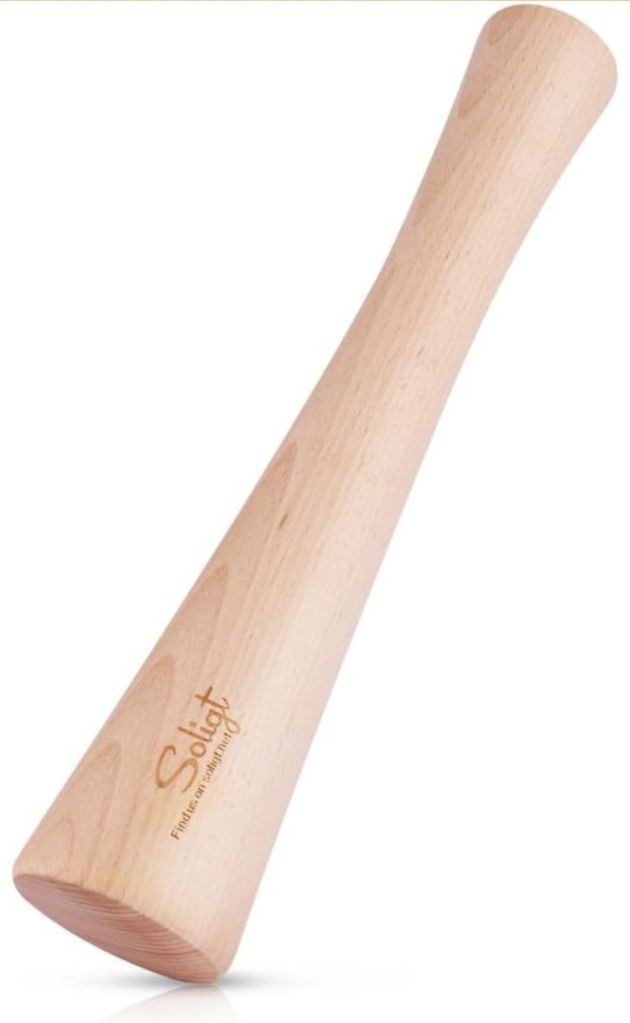
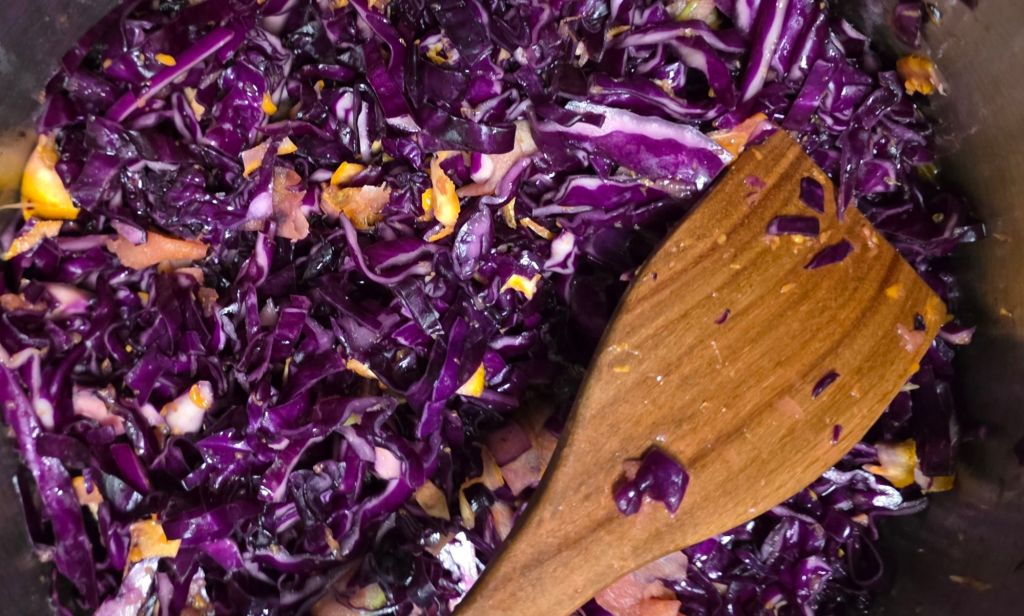
The cabbage can be green, red (very pretty) or Chinese cabbage. All will work. Cut the core out and cut it in ribbons and then cut those into bite size pieces. You will need a tamper. For my kraut I go heavy on the salt. Most people do a Tbsps of salt per head. I do a Tbsp and a half (I’m usually doing two heads, so three Tbsps) and then if I need to top the jar off at the end with a few Tbsps of bottled water (this way I have no chemicals from my tap water) I don’t lower the salt ratio too much. Mash the salted cut up cabbage with a tamper until it starts to break down and then ignore it and go do something else.
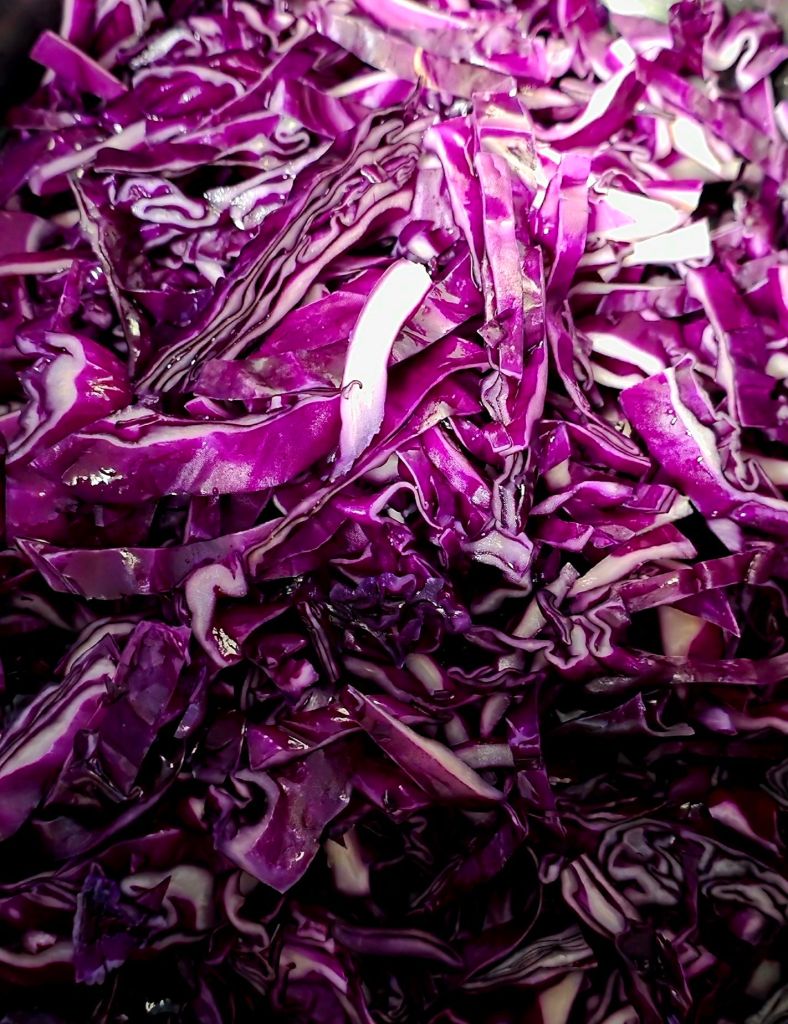
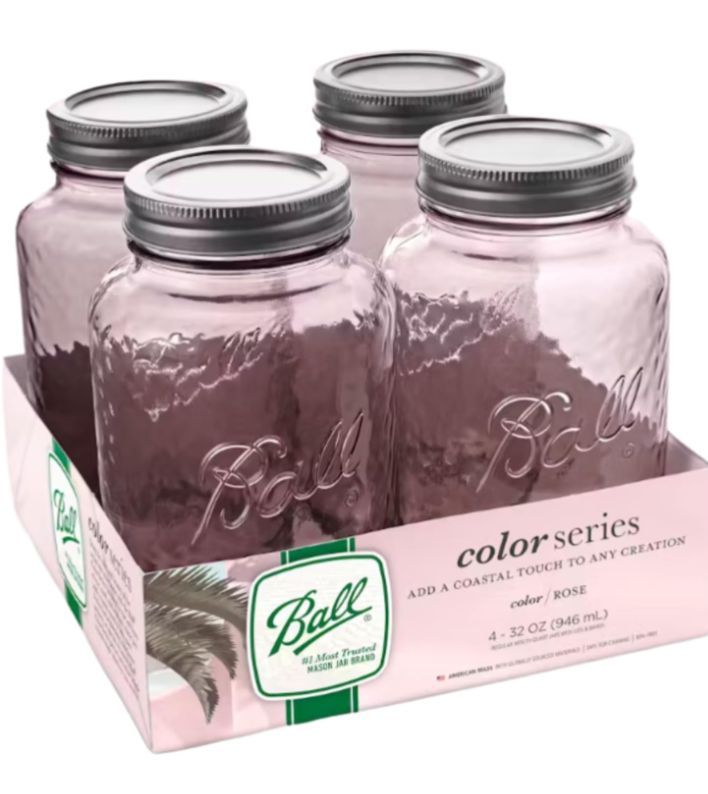
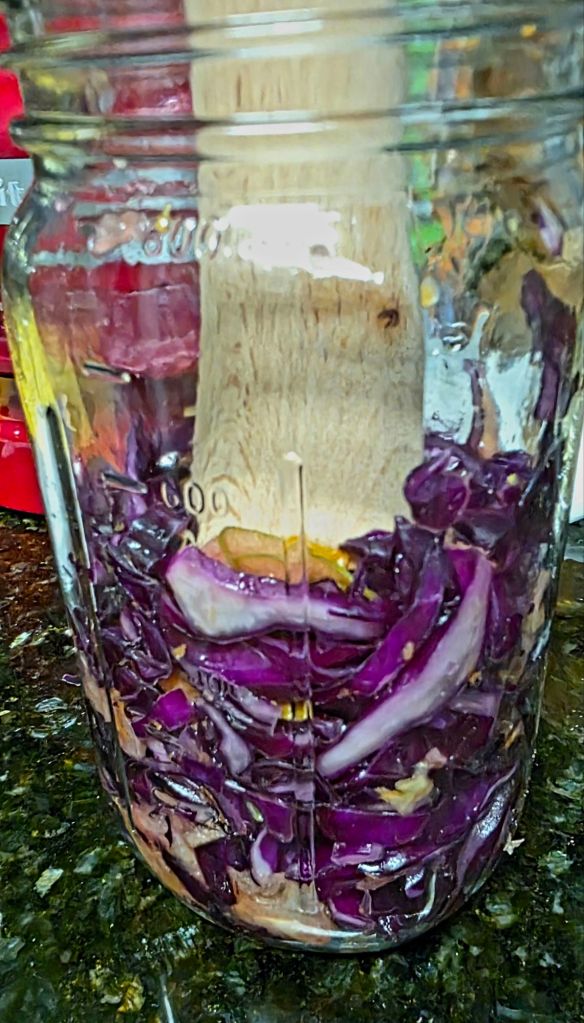
When you get back around to the cabbage it should be glossy, broken down and have brine at the bottom. Mix your additions in. This actually is easier with a tool, but you can use your hands if you want to. It helps to have a very big, deep pot so you don’t lose any out of the top of your container as you are mixing. Add it to a quart size jar and use the tamper to pack the mix tightly. Wait until you are completely done to seal these because the brine is at the bottom and you will want to add that into the jars.
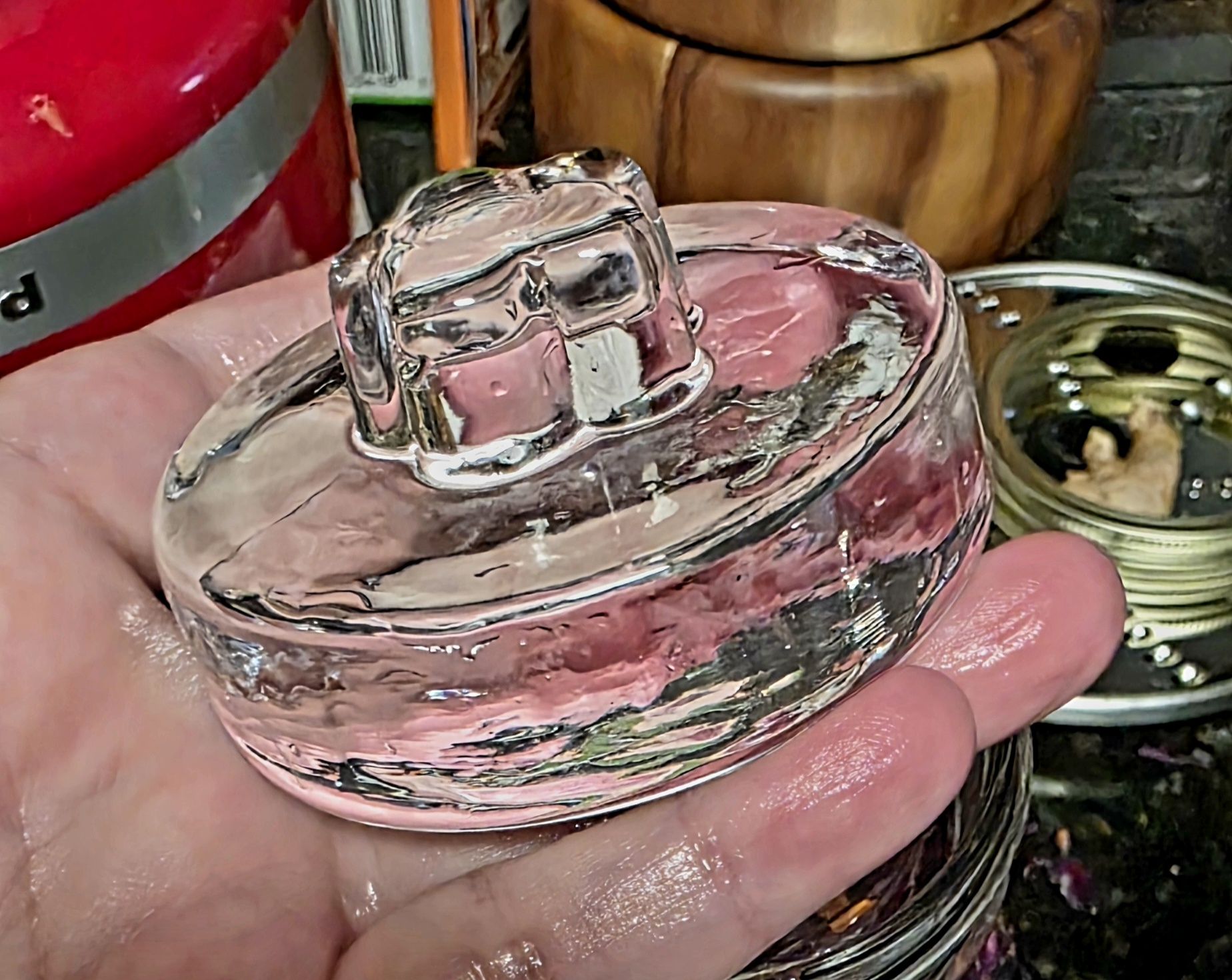
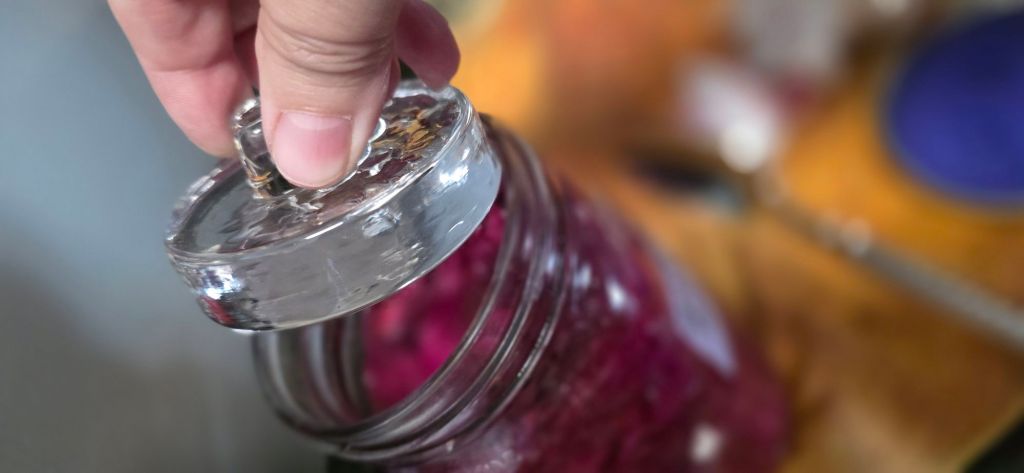
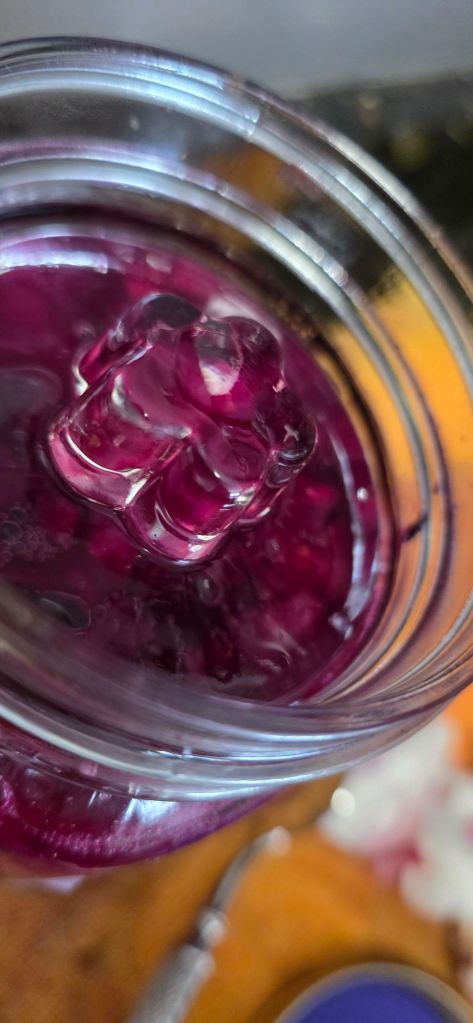
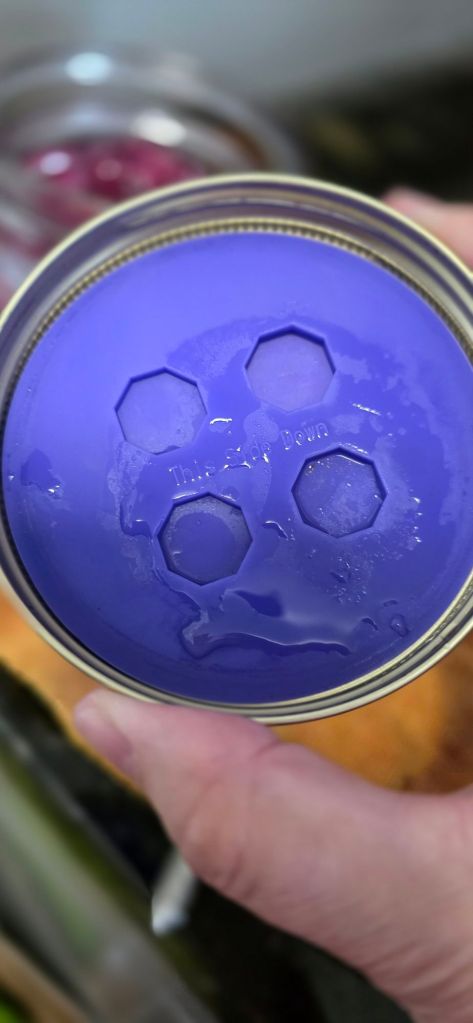
When you are done stuffing the jars: you have options. You can buy fancy water bubblers that release gas (gnats can, and will, swim through these. I don’t use them), you can buy rubber auto-burping lids. I’m using some here. Or just check them every day, use a tool to submerge the stray bits daily and burp the regular canning lid as you check for floaters.
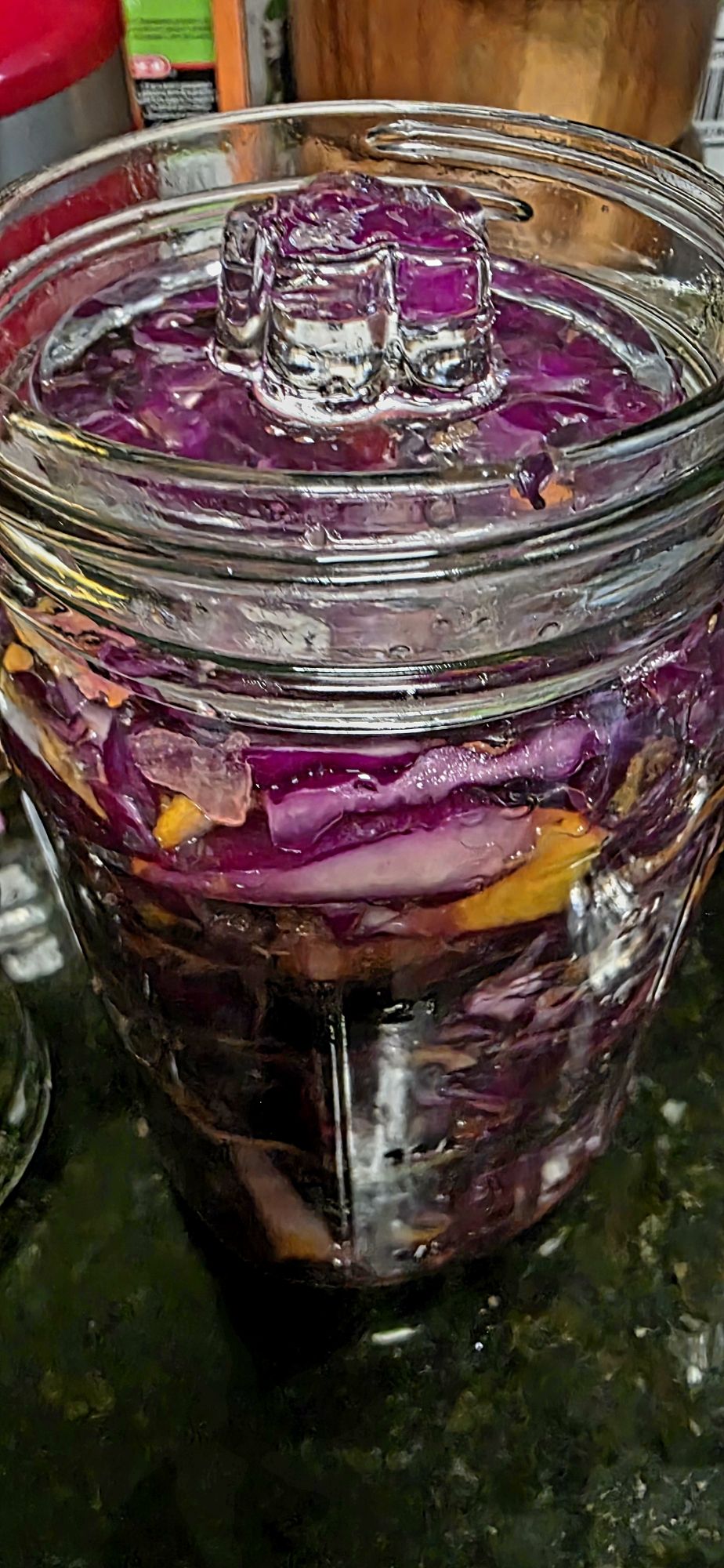
Timing. 5 days. 5 days, at the least, you are now into lactose fermentation and can decide if it’s where you want it and if you want to put it in the fridge to slow fermentation down. Before that, you may not be in a safe zone for storage yet. It will be ready when it’s bubbly and cloudy. It will get progressively more sour. I like things more fresh but still full of probiotic goodness. So I tend to ferment on the shorter end. These stay good for up to a year in the fridge. I made six and a half jars from two heads of cabbage, two granny Smith apples, a pear, a two inch piece of ginger, an orange and 4 champagne mangoes. With the tamper this compacts a lot.

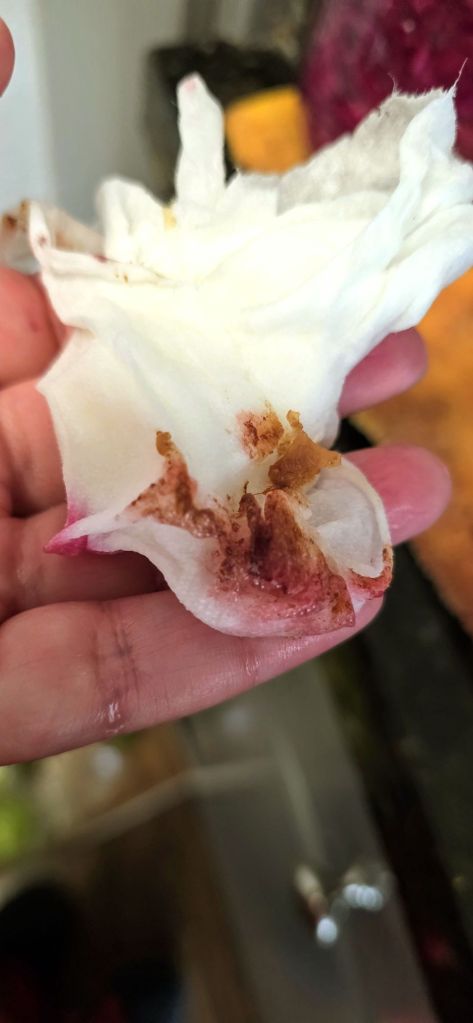
Problems: mold. Nope. Throw it out. Mold is not our friend. If you have grey fuzzy mold you were not keeping things submerged or you shorted the salt. White goo: that is not a big deal. That’s a yeast. It won’t hurt you. Skim it off if it isn’t your thing. If it stinks like it’s rotten: absolutely not. Do not eat stuff that smells rotten. It should smell vinegary and super cabbagy. That’s it. This should not be smelling weird and like you should dump it, because if it does, you should dump it! Most things that ruin fermented kraut are brine problems and that is a salt ratio imbalance. Do not lower the salt because you don’t like salty food. Salt is what makes this safe to eat in a long term ferment.


Dissappearing brine is fascinating. It used to be: kraut was not refrigerated. Since refrigeration, people have run into disappearing brine. It is still in the jar, the cabbage just sucks it up when it’s cold. Set it out on the counter, and most of the time: it will sweat it back out. This means you should not add more water. You would throw the salt ratio off. Salt is why this works instead of you ending up with rotten mush.
So. Our wrap up is: kraut is cabbage… plus: anything you want that would’t go bad on your counters. Don’t put avocado in it. God that would get nasty. Don’t put fragile fruit in it. Don’t put milk products in it because you saw lacto- in the ferment name. But do experiment. Try sweet fruits like pears, apples and cranberries (fresh stuff only, not dried and preserved with chemicals). Try things that are hard to define like chayote. Or just do cabbage by itself. This is a science experiment. You can do kimchi, which is cabbage based. I’m going to put a Mexican themed recipe up here soon. There are south American cabbage/kraut recipes. You have complete freedom here as long as you are not adding something fragile that can’t make it through the five day ferment time.

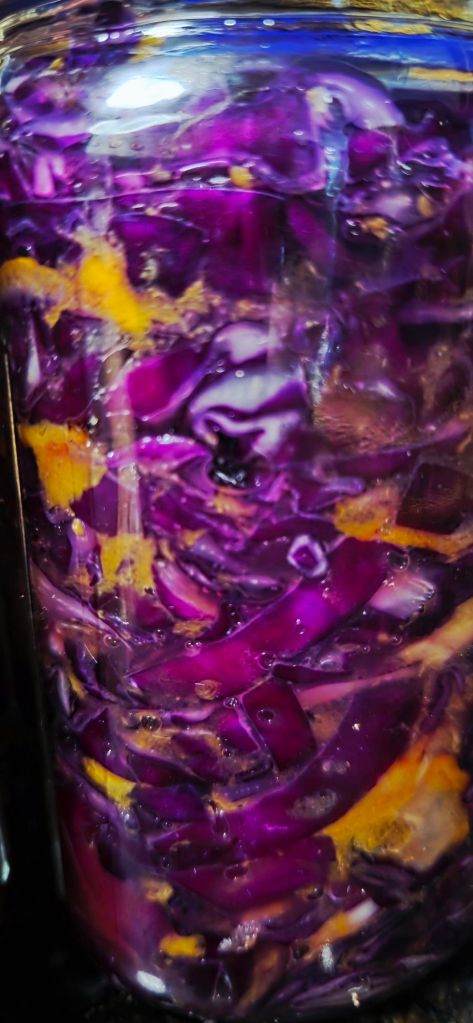
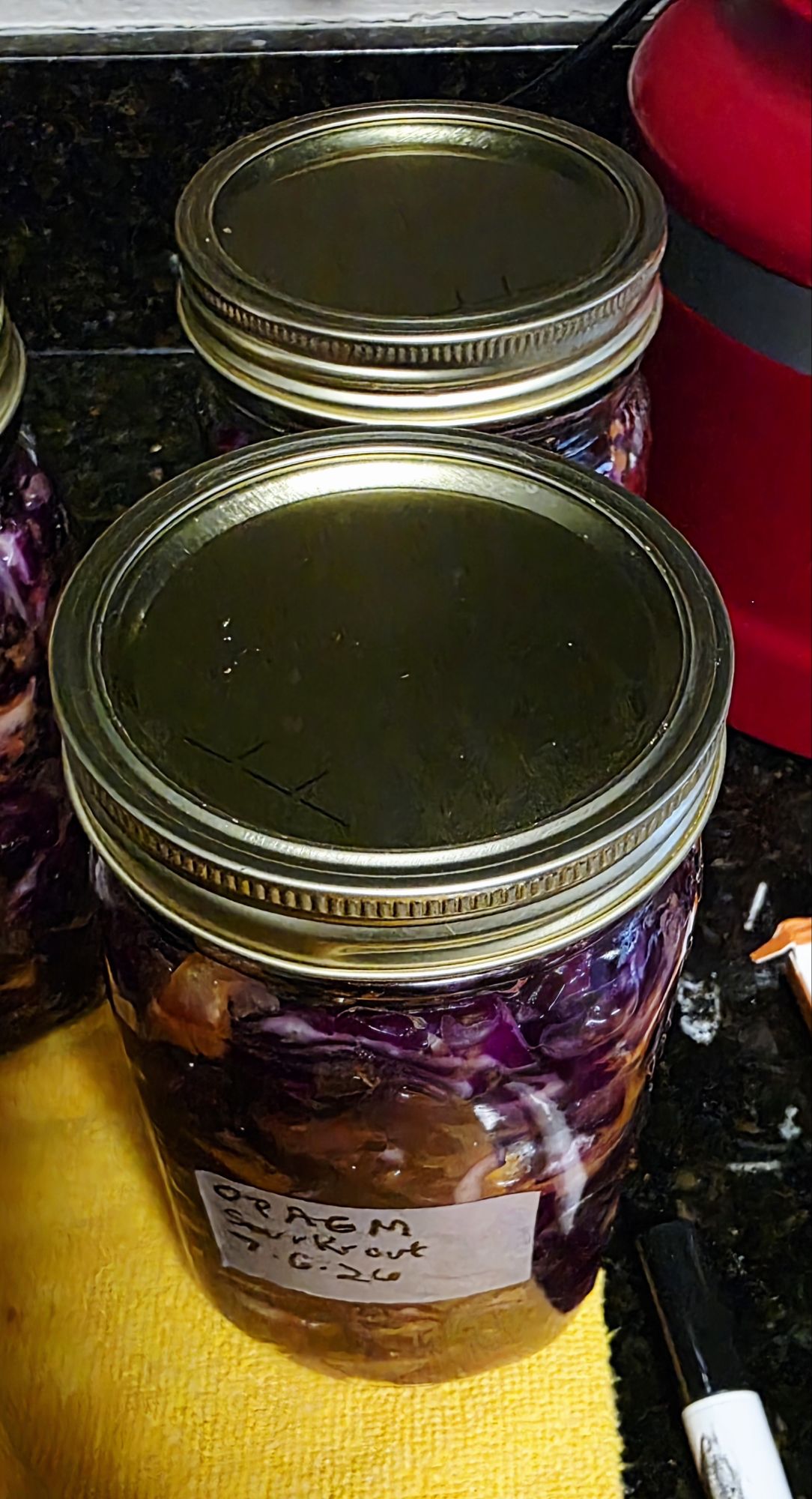
Fermenting is super easy. Run your fermentation between five and ten days and taste it. When you get to the sourness level you like, put it in the fridge. If you want to do long term fermentation without refrigeration. That puts you out past the first ten days, where your jars stop bubbling and they are shelf stable. I don’t personally do this.
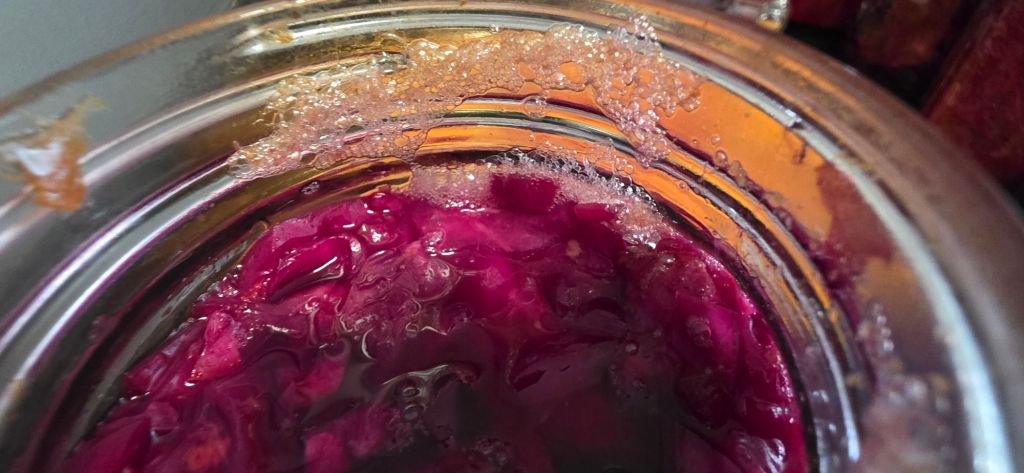
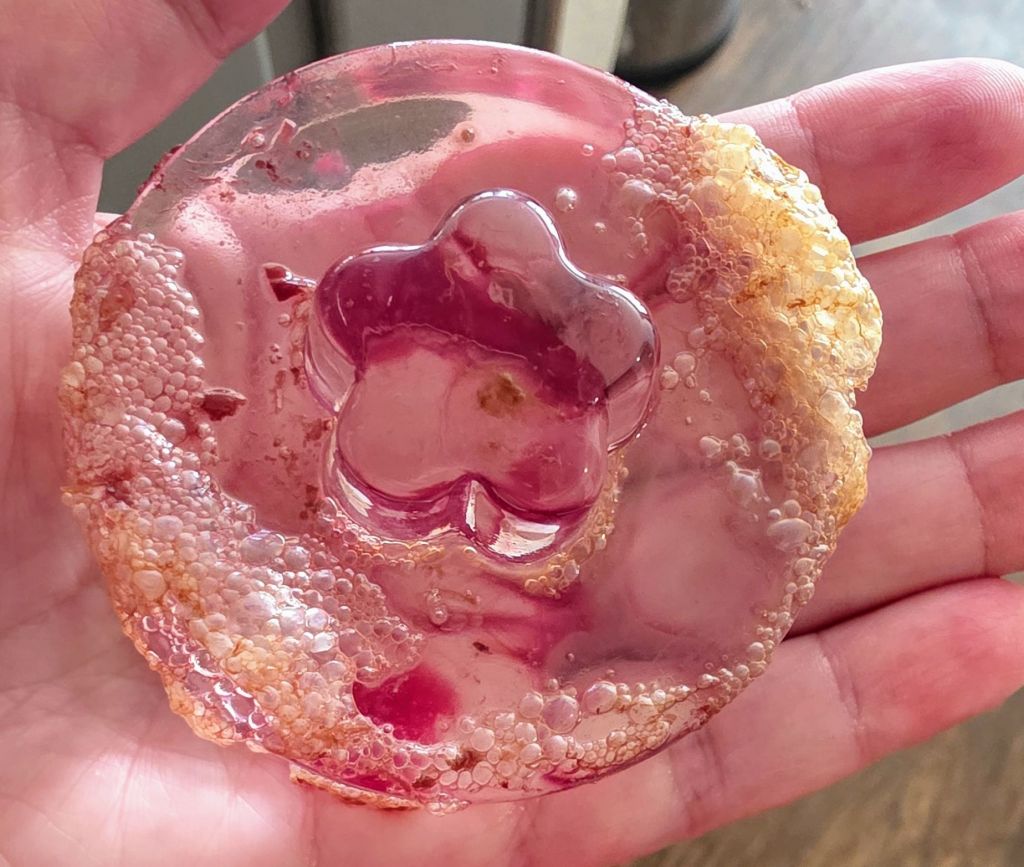
I don’t like the taste of long ferments and with fruit in here you will develop a wine flavor: because of the sugar added from the fruit. With the sugars this becomes a different animal. I suggest you refrigerate these after you reach the desired flavor instead of trying to walk the tightrope of yeast and salt ferments. In the fridge this will keep for a year. Out of the fridge, you are gambling. So, I’d say don’t try. Treat it like you would most homemade American ferments and move it into refrigerated storage. Enjoy it as a probiotic and make this in a few different flavors so you don’t get tired of it. I keep homemade yogurt, jarred kimchi that I buy from my local Vietnamese restaurant (because I don’t make it as well as they do), homemade refrigerator pickles, homemade sourdough and this form of sourkraut at all times. You won’t get tired of that kind of variety and your gut will thank you.
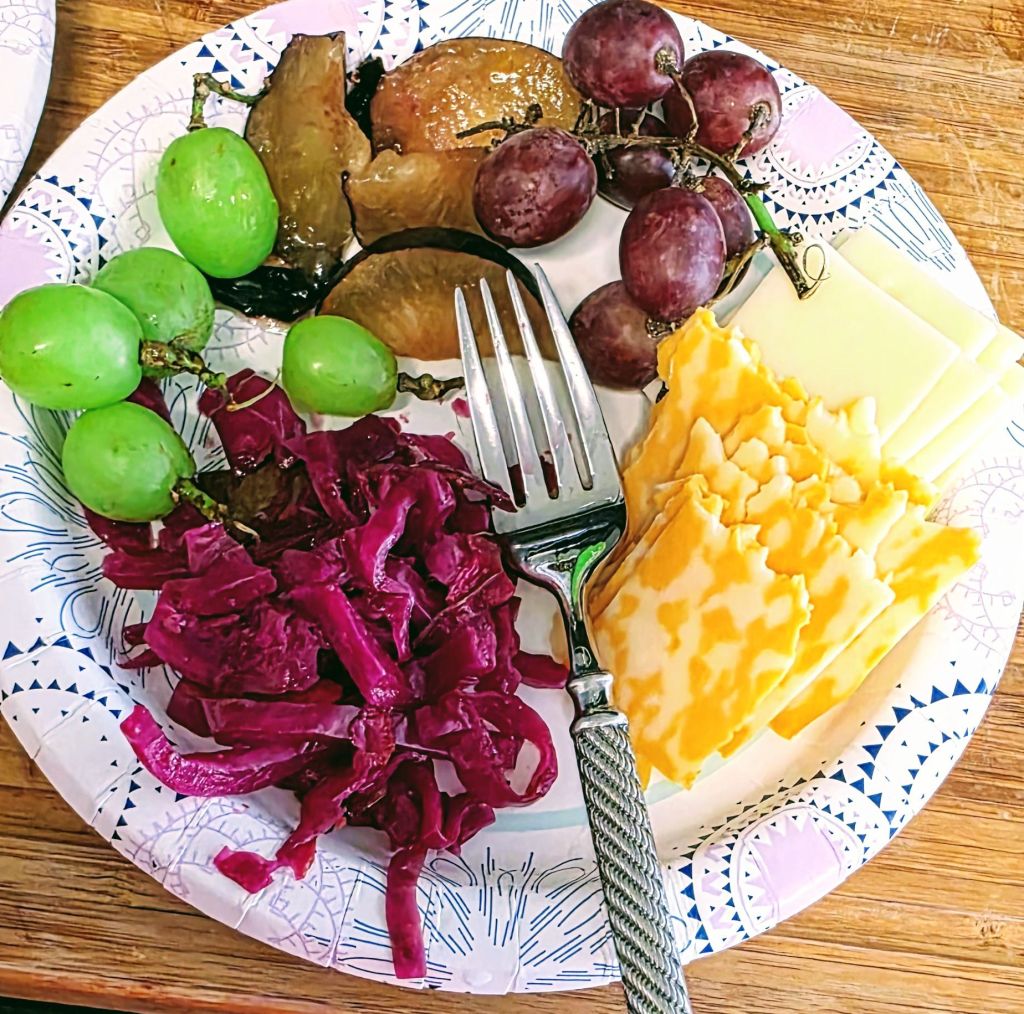
Eat it as your vegetable beside your meat for the night. Stuff it in a sandwich or a taco. Or just snack on it. Make probiotics part of your everyday life. Your gut will thank you.
See you out in the garden, where we’ll decide what our next crazy mixture of kraut will be.
Crazy Green Thumbs
Discover more from Crazy Green Thumbs
Subscribe to get the latest posts sent to your email.


This recipe/instructional post is AWESOME!!!! I am going to make a copy of it and save it!!
I’m glad you enjoyed it! I love kraut. Good for the tummy. Nice to see you after my break. I wasn’t sure if anyone would be here when I came back. 🤗
I don’t plan on going anywhere for a long, long time!!!
I have yet to tackle making my own. I eat Bubbies sauerkraut voraciously. My brother does make his own kimchi though,
I love kimchi. I have made kimchi. But my local Vietnamese restaurant makes ball jars of it and it’s authentic. I get a jar of it and I can’t keep myself out of it. I guess if I knew an old German lady who made authentic kraut I’d probably buy my kraut from her, but I love my crazy add ins. Yesterday it was really orangy but I think the orange oil floated to the top of the jar. Today I got some ginger. I just really love getting a different flavor with each bite, which is what happens with my purchased kimchi. I wish they would teach a class. Maybe I’ll ask them next time I pick up a jar. Sometimes there’s no substitute for authenticity. I’m so glad to see you. I kind of fell off a cliff for a while. Glad to be back!